Emotional abuse of a child longer-lasting effects than childhood sexual abuse?

Surprisingly, psychological, also known as ‘emotional abuse’ of a child can have more long-lasting negative psychiatric effects than either childhood physical abuse or childhood sexual abuse.

Definition of Child Psychological Abuse

Psychological abuse of a child is a pattern of intentional verbal or behavioral actions or lack of actions that convey to a child the message that he or she is worthless, flawed, unloved, unwanted, endangered, or only of value to meet someone else’s needs.

Withholding emotional support, isolation, or terrorizing a child are forms of psychological abuse. Domestic violence that is witnessed by a child is also considered a form of psychological abuse.

Types of Child Psychological Abuse

Psychological abuse of a child is often divided into nine categories:

1.  Rejection: to reject a child, to push him away, to make him feel that he is useless or worthless, to undermine the value of his ideas or feelings, to refuse to help him.

2.  Scorn: to demean the child, to ridicule him, to humiliate him, to cause him to be ashamed, to criticize the child, to insult him.

3.  Terrorism: to threaten a child or someone who is dear to him with physical violence, abandonment or death, to threaten to destroy the child’s possessions, to place him in chaotic or dangerous situations, to define strict and unreasonable expectations and to threaten him with punishment if he does not comply.

4.  Isolation: to physically or socially isolate a child, to limit his opportunities to socialize with others.

5.  Corruption or exploitation: to tolerate or encourage inappropriate or deviant behavior, to expose the child to antisocial role-models, to consider the child as a servant, to encourage him or coerce him to participate in sexual activities.

6.  The absence of emotional response: to show oneself as inattentive or indifferent towards the child, to ignore his emotional needs, to avoid visual contact, kisses or verbal communication with him, to never congratulate him.

Neglect: to ignore the health or educational needs of the child, to refuse or to neglect to apply the required treatment. (See: What is Child Neglect?)

7.  Exposure to domestic violence: to expose a child to violent words and acts between his parents.

The behavior of an emotionally abusive parent or caregiver does not support a child’s healthy development and well-being-instead, it creates an environment of fear, hostility, or anxiety. A child is sensitive to the feeling, opinions, and actions of his or her parents.

8.  Showing a lack of regard for the child

This behavior often includes rejecting the child by:

  • Not showing affection.
  • Ignoring the child’s presence and obvious needs.
  • Ignoring the child when he or she is in need of comfort.
  • Not calling the child by his or her name.

9.  Saying unkind things to the child

Emotionally abusive parents say things or convey feelings that can hurt a child deeply. Common examples include:

  • Making the child feel unwanted, perhaps by stating or implying that life would be easier without the child. For example, a parent may tell a child, “I wish you were never born.”
  • Ridiculing or belittling the child, such as saying, “You are stupid.”
  • Threatening the child with harsh punishment or even death.
  • Continuous verbal abuse.

Symptoms of Child Psychological Abuse

Symptoms of psychological abuse of a child may include:

  • Difficulties in school
  • Eating disorders, resulting in weight loss or poor weight gain
  • Emotional issues such as low self-esteem, depression, and anxiety
  • Rebellious behavior
  • Sleep disorders
  • Vague physical complaints

Psychological abuse of a child can have long-lasting negative psychiatric effects. Learn about the types and symptoms of psychological abuse.

How to report any type of child abuse:

https://www.childwelfare.gov/topics/responding/reporting/how/


APA Reference
Gluck, S. (2011, November 23). What is Psychological Abuse of a Child?, HealthyPlace. Retrieved on 2019, September 27 from https://www.healthyplace.com/abuse/child-psychological-abuse/what-is-psychological-abuse-of-a-child

Five signs a toddler has been sexually abused

Every nine minutes, government authorities respond to another report of child sexual abuse.

The possibility of children being harmed is always a tough subject for me to talk or write about, but we can never be too careful when it comes to our babies. Every nine minutes, government authorities respond to another report of child sexual abuse. Moms, we must keep the conversation going.

It’s not always easy to spot sexual abuse because perpetrators take extra precautions to hide their actions. Some signs of abuse are easier to spot than others; here’s a comprehensive list of the most common red-flags in toddlers.

1. Personality Changes

A toddler who is being sexually abused may suddenly display personality characteristics not previously seen. For example, your child may seem anxious, insecure or depressed, according to New York University’s Langone Medical Center. Confident children may also become clingy or withdrawn. Some sex abuse victims suffer from low self-esteem and may have trouble making friends their age.

2. Behavior Changes

A young child being sexually abused will often undergo behavior changes as a result of the abuse. Young children, in particular, are likely to begin acting in an age-inappropriate manner. For example, she may begin sucking her thumb or being wetting her pants or the bed even though she is already potty-trained, according to the American Academy of Pediatrics. Changes in sleep patterns are also possible, with toddlers having trouble falling asleep or having regular nightmares.

3. Sexual Behavior

A toddler being sexually abused may also begin to display some sexual behaviors. For example, he may act out sexual acts with stuffed animals or other toys or may draw pictures of sexual acts, according to the American Academy of Pediatrics. Young children may also masturbate frequently or try to initiate sexual behavior with their friends or siblings.

4. Fear

A young sexual abuse victim may suddenly seem fearful of certain people or situations, including avoiding situations in which she will encounter her abuser. They may be afraid or getting undressed even at appropriate times, such as for bathing, or seem fearful of visiting the doctor or being examined by a health professional, according to Langone Medical Center. Some children also become fearful or going to the bathroom despite earlier success.

5. Physical Signs

Physical signs rarely are noticed in cases of child sexual abuse, according to the Stop It Now! organization. Still, some possible indications of sexual abuse include vaginal or anal discharge; pain or itching in the genital region; frequent urinary tract infections or sore throats; pain while urinating or having a bowel movement; and redness, bleeding, or bruising in the genital or anal area. Some abuse victims also begin to complain of physical ailments such as headaches or stomachaches.

Remember, you are not alone.

If you suspect sexual abuse you can talk to someone who is trained to help. Call the National Sexual Assault Hotline at 800.656.HOPE (4673) or chat online at online.rainn.org.

Sources: Rainn.org. / https://www.rainn.org/articles/warning-signs-young-children.

https://healthfully.com/signs- childrenof-sexual-abuse-in-a-toddler-5625844.html. Accessed September 22, 2019.

Child sexual assault — statutes of limitations laws in your state

Each state has laws that prevent a child sex offender from being prosecuted.

When a crime is committed, there is a window of time that a state has to charge the perpetrator. The laws that determine this time frame are called criminal statutes of limitations.

As high-profile cases of sexual violence continue to make headlines—and as survivors seek to report crimes—it can help to have a better understanding of these laws and how they vary.

From the legal definition of rape to the statute of limitation for a particular sex crime, where you live makes a difference. Here’s a guide to the laws in your state.

Learn More About the Issues

Follow RAINN on Twitter at @rainnaction to be the first to know about our state policy work. #ActWithRAINN

RAINN.org- https://www.rainn.org/public-policy-action

Teen Siblings Create notOK App for Peers in Distress

Charlie said his motivation for building the app came from watching his sister spiral into depression.

What a great idea! This may be old news to some but I’m just hearing about it.

If one button could change everything, save a life or help a teen, wouldn’t you tell everyone about it?

When Hannah Lucas was diagnosed last year with a medical condition that caused frequent fainting, she felt scared and alone.

“I started passing out more and more often and I was terrified of going anywhere,” Hannah, 15, told ABC News. “Because what if I passed out and no one was around or what if someone took advantage of me?”

Hannah, a high school sophomore from Georgia, became anxious and depressed and started to self-harm, she said.

From that dark point in her life, Hannah and her younger brother, Charlie Lucas, 13, created an app to help people in distress.

The idea for the notOK App came from Hannah, who told her mom she wished there was an app she could use to quickly alert her family and friends when she needed help either physically or emotionally.

Charlie heard his sister’s idea and used coding skills he learned in summer camp to design the app.

“I helped illustrate it out so he would know what to do,” Hannah said of her brother. “He looked at my drawings and he coded it to tell the coders exactly what I wanted and how I wanted it to look.”

Charlie said his motivation for building the app came from watching his sister spiral into depression.

“I saw Hannah depressed, and she told me about her idea, and I started wire-framing it,” he said. “Making this app made her feel better and that made me feel better.”

Hannah pitched the app while taking a summer class on entrepreneurship at Georgia Tech. Professors there were so intrigued by the siblings’ creation that they connected the family with a development company in Savannah.

Over the course of five months, Hannah and Charlie worked side by side with the developers, often over Skype, to see their idea for the app turn into reality.

They also compiled research on mental health statistics to make the case that their app would find an audience.

Mental illness is defined by the National Institute of Mental Health (NIMH) as a mental, behavioral, or emotional disorder. One in six U.S. adults lives with a mental illness, the institute reports.

Among adolescents, an estimated 49.5 percent between the ages 13 to 18 have a mental disorder, according to NIMH.

NotOK was launched in February 2018, both iOS and Android versions. The app, was originally came with a $2.99 monthly fee, but is now offered for Free. It allows users to press a button that sends a text message to up to five preselected contacts.

The text, along with a link to the user’s current GPS location, shows up on the contacts’ phones with the message, “Hey, I’m not OK. Please call me, text me, or come find me.”

“The reaction we’ve heard has been really positive, especially from parents and kids suffering with anxiety,” Hannah said. “Those kids don’t know the words to tell somebody.”

Hannah added of the app, “It definitely gave me a sense of comfort.”

Original source: https://www.google.com/amp/s/www.goodmorningamerica.com/amp/wellness/story/teens-struggle-depression-led-brother-create-app-52791054. By KATIE KINDELAN. Accessed September 12,2019.

I Want To Tell You About My Suicidal Thoughts

National Suicide Prevention Week: Sunday, September 8 – Saturday, September 14, 2019

By: Amanda Rances Wang, Good Advice – 9/8/2019

Suicide is the 10th leading cause of death in the United States, yet it is still treated with shame and silence. In honor of National Suicide Prevention Week, we’re sharing stories about suicide in order to encourage awareness and combat stigma. If you or someone you know is struggling with thoughts of suicide, please call the National Suicide Prevention Lifeline at 1-800-273-8255.

I’ve struggled with depression and suicidal thoughts since I was a teenager. But by the time I was 29, I thought I had things under control. I took antidepressants and talked to a therapist every week. I had a full life with my husband of three years. Trips were ventured, friends gathered together, and there were plenty of nights on the town. Everything appeared fine from the outside.

It’s just that there’s this one single thing that I slowly began to notice until I could no longer deny its presence in my life. I was gay.

In my mind, being gay meant the destruction of the one thing that I thought kept the demons at bay: my marriage. I was in love and he had this uncanny ability to draw me out from the dark side. Being married to this wonderful person, I thought, would solve all my problems. So now to be gay, and lose him and all that he represented? I wouldn’t dare make that leap. To even think about it was too painful, too terrifying.

I got far enough with my suicidal ideation that I finally shared all my passwords and bank account information with my friend Karen. I also gave her access to my online journal, and she noticed a very disturbing passage about how I had been hurting myself. The next thing I know, my brother knocks on my apartment door. “Is everything okay?” he asks. “Karen told me about what you wrote, are you sure you’re okay?”

I told him I was fine, but he knew me better. That Friday after dinner, my family—my parents, my brother, my husband, and my godmother—were gathered at my parents’ house. In front of everyone, my brother shared that he was concerned about my well-being, and that he noticed I’ve been having a hard time. Then he outed me, right then and there, announcing that I’m gay—revealing the truth that I had only ever written in my journal. Tears started to fall down my husband’s cheeks. He said, “Whatever makes you happy, Amanda. I’ll support it.” You’d think that would make my decision easier and lighten my load, but instead, I thought to myself, “I am one fucking terrible person.”

The self-harm got worse and more frequent after that. I was doing anything to take the edge off and dull the pain. Two weeks later, Karen finally told me, “Amanda, we’ve done all we could. You’ve done all that you could. You’ve seen your therapist, you’re taking meds, you’ve told your husband and your parents, and still it’s not working. It’s time, Amanda. I think it’s time you entered yourself into the hospital.”

It took a long time, but once I was able to manage my symptoms, I was able to come to terms with the reality of who I was.

It was there on the 11th floor of a New York City hospital that my social worker finally puts a name to what I’ve been suffering from most of my life. She begins to read each of the nine symptoms out loud, and with every symptom, I’m convinced she’s reading my biography. “Amanda, have you ever heard of borderline personality disorder?” she asks.

That moment changed my life. Receiving a diagnosis put me on the track to proper treatment (dialectical behavior therapy, which is designed specifically to help people with BPD) and with it, I begin to understand my emotions, my vulnerabilities, and most important of all, what to do when I am feeling suicidal—tools that I never really had before.

It’s been 13 years since I received my diagnosis. I continue to work with a DBT therapist and go to a group class to learn the skills I need to thrive. My therapist has been invaluable to me. She challenges me, keeps me accountable, and helps me build a life I’m happy to live as a proud gay woman. It took a long time, but once I was able to manage my symptoms, I was able to come to terms with the reality of who I was. It was so hard for me to let go of my husband, who gave me hope, stability, and structure—things so important to my mental health—but I had to first believe that I could be those things for myself.

Still, it hasn’t been easy. I continue to work through suicidal thoughts and urges. I have been hospitalized three additional times since my first hospitalization all those years ago. Although I sometimes see those as failures, I ultimately recognize that indeed, they were strides in the right direction. I’m still here, and that has to count for something.

You know what? Maybe that something is courage. People who have been through hell and live in a body and mind that conspire to kill itself are incredibly courageous for not only sticking it out, but for seeking the right professional help to keep them alive. Seemingly insignificant things like talking to the barista, going for a jog, holding ice in your hands, and yes, accepting help when you need it most, are courageous acts in the face of suicide. We must choose courage, no matter how difficult and painful the road ahead of us lies.

Amanda Rances Wang is a digital designer by trade, an advocate for those living with mental illness, and founder of a startup. She lives with her son in Long Island, NY.

Here’s the best way to take care of a friend struggling with suicidal thoughts. And here’s the best way to talk about suicide, according to a psychiatrist.

Source: www.wellandgood.com/good-advice/suicidal-thoughts-depression-help/

Alarming number of children sexually abusing other children, study shows

Peer-on-peer abuse is often undetected by parents, who assumed their kids are safe around other kids.

The national survey commissioned by Act for Kids revealed a staggering 24% of child abuse cases involve another child.

It also showed peer-on-peer abuse was often undetected by parents, who assumed their kids are safe around other kids.

Act for Kids released the research ahead of Child Protection Week (September 1-7) to urge parents to take the necessary steps to protect their children online and learn more about the warning signs of problematic sexual behaviors.

The survey of 2,000 people living in Australia revealed, while three quarters blame access to adult content for problematic behaviours, two-thirds of parents still fail to secure their devices and one in two allow their children unsupervised access online.

While there are a number of places children might learn problematic behaviors, easy access to age-inappropriate content is a major factor in influencing these young minds.

Act for Kids program manager Miranda Bain said the survey findings were both surprising and scary,

“There is a lack of knowledge amongst parents of what constitutes problematic sexual behaviours in children and how these behaviors have the potential to lead to more harmful peer-on-peer abuse,” Ms Bain said.

“While there are a number of places children might learn problematic behaviors, easy access to age-inappropriate content is a major factor in influencing these young minds.”

Act for Kids Executive Services Director and Psychologist, Dr. Katrina Lines said, it was vital parents take the necessary steps to protect their children online and learn more about the warning signs of problematic sexual behaviors.

Dr. Lines explains, “Some steps parents can take to protect their kids is making sure they understand normal child sexual development and curiosity and share accurate facts and information about sexuality with their children,”

Source: www.illawarramercury.com.au/story/6361787/alarming-number-of-children-sexually-abusing-other-children-study-shows/

This is how to rewire your brain for happiness: 4 secrets from research

“Thoughts determine feelings.”
Remember that. Make a note. Get a tattoo.

This is an awesome article which can apply to anyone, at any age. Especially teens.

By Eric Barker, TheLadders.com

Someone compliments you and you think, “They don’t mean it.” Something good happens and you hear, “I don’t deserve this.” You’re meeting new people and it’s, “They won’t like me.”

And you usually accept those words because they’re coming from inside your head. It’s like the horror movie where the calls from the killer are coming from inside the house.

These are called “automatic thoughts.” And they suck. But we all know the answer: you just need to think happy thoughts, right? Wrong. Let’s get our psychology lessons from somewhere other than Instagram memes, alright? “Think happy thoughts” doesn’t help unless you don’t need help.

From The Confidence Gap:

Their study, entitled “Positive Self-Statements: Power for Some, Peril for Others,” … showed that people with low self-esteem actually feel worse after repeating positive self-statements such as “I am a lovable person” or “I will succeed.” Rather than being helpful, these positive thoughts typically triggered a strong negative reaction and a resultant low mood.

So when you’re really feeling down, happy cliches won’t cut it. Nope. So we’re gonna need to science the hell out of this one. We need to rewire your brain, bubba.

From Cognitive Therapy and the Emotional Disorders:

This new approach— cognitive therapy— suggests that the individual’s problems are derived largely from certain distortions of reality based on erroneous premises and assumptions. These incorrect conceptions originated in defective learning during the person’s cognitive development. Regardless of their origin, it is relatively simple to state the formula for treatment: The therapist helps a patient to unravel his distortions in thinking and to learn alternative, more realistic ways to formulate his experiences.

It’s not hard or expensive, but it’s gonna take some practice. (Look, if you can spend 10 minutes taking a Facebook quiz to find out which Harry Potter character you are, you can spend 5 minutes a day to live a happier life, alright?). And once you get good at this it won’t just make you happier — these techniques are proven to help with all kinds of issues from procrastination to anxiety to anger.

From Thoughts and Feelings:

Challenging automatic thoughts is a powerful way to counter perfectionism, curb procrastination, and relieve depression and anxiety. It is also helpful in treating low self-esteem, shame and guilt, and anger. The techniques in this chapter are based on the cognitive therapy of Aaron Beck (1976), who pioneered this method of analyzing automatic thoughts and composing rational comebacks to refute and replace distorted thinking.

We’re gonna get some solid answers from Dr. Matthew McKay’s “Thoughts and Feelings” and even roll psychologically old school with UPenn professor Aaron Beck’s 1979 classic “Cognitive Therapy and the Emotional Disorders.”

Let’s get to it…

Cognitive Therapy 101

“Thoughts determine feelings.” Remember that. Make a note. Get a tattoo. This powerful idea goes back thousands of years to the Stoics. Aaron Beck even quotes Marcus Aurelius and Epictetus (the Biggie and Tupac of Stoicism) in his book.

From Cognitive Therapy and the Emotional Disorders:

If thou are pained by any external thing, it is not this thing that disturbs thee, but thine own judgment about it. And it is in thy power to wipe out this judgment now. – Marcus Aurelius

“Always trust your feelings” sounds sweet but you wouldn’t tell that to someone with a phobia, a hoarding problem, or — god forbid — homicidal impulses, would you? No. Teenagers and golden retrievers are excellent at blindly following their feelings but neither are regularly consulted on their decision-making skills. Continue reading…

Your adult child resents the way you parented them. Here’s how to handle it.

You can be a good parent and have unintentionally caused hurt in your child.

This 8-step process will help you get through the conversation and build a better relationship with your grown children.

By Nicole Spector

As my husband and I deepen our discussions around family planning, we’re tackling a number of questions about budgeting, housing, childcare, employment and so on. Most of our inquiries are of a fairly practical nature, such as “How can we afford this?”, and “What kind of parental leave can we work out?”

But some of our questions tend to veer into the wild, snake-infested territory of “what ifs”. One of my favorites to ponder, with an urgent hopelessness, is “What if we screw up and our kid grows up to resent us for it?”

It’s an impossible question to answer right now, but in 20 years or so, I might be asking this same question, and justifiably so.

“Even when they do their best, parents fall short regardless and there will be memories and experiences that children find hurtful,” says Lauren Cook, MMFT, a doctoral candidate in clinical psychology at Pepperdine University. “There is no such thing as a perfect parent.”

So what is a parent to do if, after raising their kid as best they could, their grown child begrudges them for how they were raised or how said parent handled a particular issue?

Through consulting numerous therapists, we’ve pieced together a 8-step process detailing how parents can deal with this difficult situation, and ultimately build a better relationship with their grown children.

You can be a good parent and have unintentionally caused hurt in your child.

Continue reading…

— Read on www.nbcnews.com/better/lifestyle/your-adult-child-resents-way-you-parented-them-here-s-ncna1042081

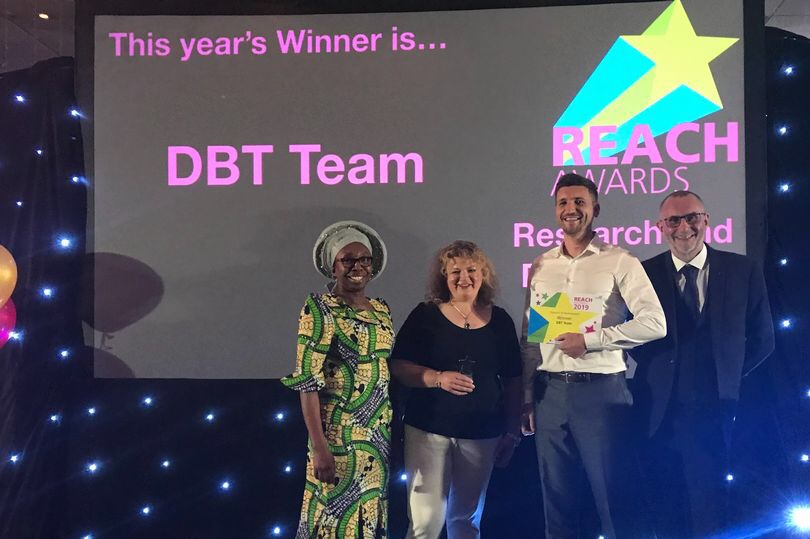
Meet The Psychologists Helping Teens to Manage Mental Health and Reduce Self-harm

The DBT service aims to replace problematic behaviours with skillful ones, help teenagers navigate relationships and experience a range of emotions without necessarily acting on them.

By Bethan ShufflebothamCommunity Reporter

Five years ago there were no specific interventions for young people who were self-harming and feeling suicidal outside of cognitive behavior therapy (CBT) and family therapy.

In December 2014, the Trust’s Children and Adult Mental Health Service (CAMHS), was set up to meet the growing demand of young people with high levels of mental health needs in North Staffordshire.

Specifically, the team assisted teenagers aged 13 to 17 going through emotional difficulties which were causing them to self-harm or attempt to take their own lives.

The aim is to replace problematic behaviors with skillful ones, help teenagers navigate relationships and experience a range of emotions without necessarily acting on them.

Some states now allow students to take “mental health days.” This is an opportunity to start a conversation about how to address mental health in schools. Continue reading…

Here’s Why Your Teen Feels Constantly Criticized

Whether or not [parents] actually express more criticism than praise, teens and tweens are particularly susceptible to a distorted way of thinking referred to as mental filtering.

By Alisa Crossfield, Ph.D., Psychology Today

One of the most common complaints I hear from my tween, teen and young adult clients is that their parents harp on what they do wrong and never recognize all they do right.

At times, I have heard it from my own kids as well. Though there is the rare occasion when this is an accurate reflection of what parents think, more often one of two things are happening, and often both.

One of the culprits in maintaining kids’ beliefs that parents only see what they do wrong stems from our desire to help them. That desire translates into a never-ending flow of constructive criticism.

Whether or not [parents] actually express more criticism than praise, teens and tweens are particularly susceptible to a distorted way of thinking referred to as mental filtering. 

Continue reading: www.psychologytoday.com/us/blog/emotionally-healthy-teens/201906/feeling-constantly-criticized