As Christians it is our obligation to properly discern the message communicated by various symbols. God would not have us ignorant to the enemy or his devices (II Cor 2:11).
Know the signs and teach your children!
God would not have us ignorant to the enemy or his devices (II Cor 2:11).
Symbols represent strong presence in and/or authority over the item/person to which they are attached. Just like churches affix crosses to their steeple as a demonstration of Jesus’ Lordship over them, Nazis fly a Nazi flag over their homes or sport the emblem as an accessory indicating an allegiance/submission to all things Nazi.
While the symbols listed do have ties to occult/satanic practices, it is also important to know that some have been hi-jacked. As Christians it is our obligation to properly discern the message communicated by various symbols.
Great resources, carefully selected, on key topics related to the sexual abuse and assault of boys and men
Here’s a list of carefully vetted resources on key topics related to the sexual abuse and assault of boys and men from 1in6.org. Each has been determined to offer a positive, hopeful message about the potential for healing and recovery and has been found useful by many men with histories of unwanted or abusive sexual experiences, as well as the people who care about them.
Please note that some books may contain graphic content. If you need support, visit the free and anonymous 24/7 national helpline to chat with a trained advocate.
After selecting a category below, you’ll see a list of recommended titles and links to their Amazon pages. For men who are incarcerated, one book is available to borrow for free.
It’s not uncommon for childhood trauma to manifest itself well into adulthood. When we start to connect-the-dots, it’s clear to see a direct correlation between certain childhood events and our self-worth. Low self-esteem can be a result of a negative or dysfunctional family environment, but where exactly does it originate? There’s no one answer to this question but here’s a short list of ways your parents may be the root-cause of your low self-esteem.
1. Disapproving Authority Figures
If you grew up hearing that whatever you did wasn’t good enough, how are you supposed to grow into an adult with a positiveself-image? If you were criticized no matter what you did or how hard you tried, it becomes difficult to feel confident and comfortable in your own skin later. Thefear forced on you for perpetually “failing” can feel blindingly painful.
2. Uninvolved/Preoccupied Caregivers
It’s difficult to motivate yourself to want more, strive for more, and imagine that you deserve more when your parents or other primary caregivers didn’t payattention– as if your greatest achievements weren’t worth noticing. This scenario often results in feeling forgotten, unacknowledged, and unimportant later. It can also leave you feeling that you are not accountable to anyone, or you may believe that no one in the here and now is concerned about your whereabouts, when that’s actually a carry-over feeling from the past. Feeling unrecognized can result in thebeliefthat you are supposed toapologizefor your existence.
3. Authority Figures in Conflict
If parents or other caregivers fight or make each other feel badly, children absorb the negative emotions and distrustful situations that have been modeled for them. It’s scary, overwhelming, and disorganizing. This experience can also occur when one parent is deeply distraught or acts unpredictably around the child. When you were subjected to excessive conflicts between authority figures, it can feel as if you contributed to the fights or to a parent’s painful circumstance. Intense conflicts are experienced as extremely threatening,feardriving, and you may believe you caused it. This feeling of being “tainted” can be carried into adulthood.
4.Bullying(with Unsupportive Parents)
If you had the support of a relatively safe, responsive, aware family you may have had a better chance of recovering and salvaging yourself esteemafter having been taunted and bullied as a child. If you already felt unsafe at home and the torture continued outside home, the overwhelming sense of being lost, abandoned, hopeless, and filled with self-loathing pervaded your everyday life. It can also feel like anyone who befriends you is doing you a favor, because you see yourself as so damaged. Or you may think that anyone involved in your life must be predatory and not to be trusted. Without a supportive home life, the effects of bullying can be magnified and miserably erode quality of life.
5. Bullying (with Over-Supportive Parents)
Conversely, if your parents were overly and indiscriminately supportive, it can leave you feeling unprepared for the cruel world. Without initial cause to develop a thick outer layer, it can feel challenging and even shameful to view yourself as unable to withstand the challenges of life outside the home. From this perspective, you may feel ill prepared and deeply ashamed to admit this dirty ugly secret about you, even to your parents, because you need to protect them from the pain they would endure if they knew. Instead, you hid the painful secret of what’s happened to you. Shame can cloud your perspective.
Eventually it can seem as if your parents’ opinion of you is in conflict with the world’s opinion of you. It can compel you to cling to what is familiar in your life, because it’s hard to trust what’s real and what isn’t. You may question the validity of your parents’ positive view of you, and default to the idea that you are not good enough or are victim-like and should be the subject of ridicule.
6. Bullying (with Uninvolved Parents)
If your primary caregivers were otherwise occupied while you were being bullied and downplayed your experience, or they let you down when you needed their advocacy, you might have struggled with feeling undeserving of notice, unworthy of attention, and angry at being shortchanged. When the world feels unsafe, the shame and pain are brutal. These feelings could also be evoked if parents were in transitional or chaotic states – so that what happened to you wasn’t on anyone’s radar. If there’s chaos at home, it can be hard to ask for attention or to feel like there is room for you take up space with your struggles. Instead, you may retreat and become more isolated and stuck in shame.
7. Academic Challenges Without Caregiver Support
There’s nothing like feeling stupid to create low self-esteem. If you felt like you didn’t understand what was happening in school – as if you were getting further and further behind without anyone noticing or stepping in to help you figure out what accommodations you needed – you might have internalized the belief that you are somehow defective. You may feel preoccupied with and excessively doubt your own smartness, and feel terribly self-conscious about sharing your opinions. The shame of feeling as if you aren’t good enough can be difficult to shake, even after you learn your own ways to accomodate for your academic difficulties.
8.Trauma
Physical, sexual, or emotional abuse may be the most striking and overt causes of low self-esteem. Being forced into a physical and emotional position against your will can make it very hard to like the world, trust yourself or trust others, which profoundly impacts self-esteem. It may even feel like your fault when it couldn’t be less your fault. Obviously, in these scenarios, there is so much going on at one time that you might need to check out, dissociate, go away. It can make you feel like nothingness. In an effort to gain control of your circumstances, in your head you may have convinced yourself that you were complicit or even to blame. You may have found ways to cope with the abuse, to manage the chaos in ways that you understand are unhealthy, so you may ultimately view yourself as repulsive and seeringly shameful, among a zillion other feelings.
9. Belief Systems
When your religious (or other) belief system puts you in a position of feeling as if you are perpetually sinning, it can be similar to the experience of living with a disapproving authority figure. Whether judgment is emanating from authority figures or from an established belief system in your life, it can evoke shame,guilt, conflict and self-loathing. Many structured belief systems offer two paths: one that’s all good and one that’s all bad. When you inevitably fall in the abyss between the two, you end up feeling confused, wrong, disoriented, shameful, fake, and disappointed with yourself over and over again.
It is important to understand that experiencing any of these early circumstances doesn’t mean you must be bound by them as an adult. They will be woven into your fabric and absorbed into your sense of yourself in different ways over time, but there are many paths to feeling that you are better prepared, less fragmented, and more confident moving forward.
As an adult, when you examine your history, you can begin to see that in some cases the derision or intense negative messages you encountered weren’t necessarily meant for you. Rather, they flowed from the circumstances of the people who delivered them. That perspective can help you to dilute the power of the negative messages about yourself you received and formed.
There are some circumstances you may have suffered that may be impossible to understand. You can’t and aren’t expected to understand, empathize or forgive in these circumstances. What matters most is continuing to find ways to feel as okay and as safe as you can in your own life right now.
The more you understand the sources of your low self-esteem and can put them into context, the more you can use your self-understanding to begin the process of repairing self-esteem and living the life you’ve always wanted.
Source: Original article, psychologytoday.com- 2013, by Suzanne Lachmann Psy.D.
“Sometimes I look at my kids and wonder if I’m f***ing them up”.
True story.
Last summer I was outside chatting with my neighbor, a very bubbly, high-energy nurse, happily married, with five kids. She and her husband were the ‘neighborhood socialites’. You know the house, the one where there’s a party 6 nights a week.
That particular night, as we all sat around talking and laughing about something I don’t remember, my neighbor paused, took a sip of wine and said; “… sometimes I look at my kids and wonder if I’m f***ing them up”.
That moment was so real. I could definitely relate because I’ve second-guessed my parenting skills numerous times over the years.
Remember when they were first born?
Every new parent experiences that first terrifying moment: your baby is screaming, not crying, screaming. You try to feed him. You check his diaper. You try to make him warmer, cooler, calmer, more comfortable, but to no avail. The complete mystery of this precious 8 pound, non-speaking creature rises to your consciousness, and, all at once, you’re struck by the realization that you have absolutely no idea what this tiny person wants or what to do to make him feel better.
It seems parenting would get easier as they get older. So not true. Different age means different needs. Sure, our children get older and become more self-sufficient. But there’s always an interesting, new challenge.
No parent is perfect. But how you react to your children’s emotions will always be important. Should you feel stressed or agitated, your child is likely to have trouble relaxing.
Should you feel calm and sure of yourself, your child is likely to feel secure and trusting. Our children depend on us for survival and, therefore, are highly attuned to our emotions.
So while we can’t expect to be perfectly in sync with our children at every moment, what we can do is recognize that no matter how oblivious we are to them, our children are almost always extremely attuned to us.
Every reaction we express (consciously and unconsciously) is absorbed by them, helping them shape their view of the world and of themselves.
The more calm and compassionate we are in reacting to our children, the moreresilient they become in handling their own emotions. Yet, as parents, we will always have moments when we fumble, tense up, say the wrong thing, and offer the wrong remedy.
Therefore, really improving our parenting means gaining a better understanding of ourselves. All parents both love and hate themselves, and they extend both of these reactions to their children. Because our kids come from us, we often confuse our own self-perceptions and experiences with theirs. The love we feel for ourselves is extended to our children as “Parental Nurturance.”
When parents feel good about themselves, they are much better able to extend this positive sense of self to their children. They can engage in activities, relate to, and offer their children support from a place of confidence and ease.
On the opposite side of the spectrum, when parents feel negatively toward themselves, it is equally easy for them to extend these feelings to their children. The negative thoughts parents harbor toward themselves can lead to parental rejection, neglect, or hostility.
Not only are parents more likely to be critical of their offspring in ways that are similar to the ways they are disapproving of themselves, but their negative self-esteem also serves as an example for their children. When we hear our kids comment on their weight or call themselves stupid, we may wonder where they got such ideas about themselves. We may never call our kids the things they call themselves, but we can certainly recall the many times we’ve criticized ourselves for being fat or stupid in front of them.
As kids grow up, they often take on their parents’ negative self-perceptions and the critical point of view directed toward them. For example, if a parent regards their child as a burden, that attitude will be woven into the child’s self-esteem. This negative programming, from parents and other influential persons in the child’s development, combined with other influences such as accidents, illness, and anxiety lead to the formation of the “Anti-Self System” and the “Critical Inner Voice” that accompanies it.
The Anti-Self System represents a variety of destructive and critical attitudes children adopt toward themselves and the world at large. The critical inner-voice operates as an internalized parent, reminding people of their flaws, warning them against certain actions, and instructing them about how to perceive the world.
Hurtful parental attitudes, projections, and unreasonable expectations expressed toward children are the basis of low self-esteem.
There are parents who offer false praise to their children in an effort to compensate for an absence of parental nurturance. This build up is actually harmful to a child’s sense of self, because it does not represent the truth and is not proportional to the child’s real actions or abilities. Verbally building up a child with statements like, “Look how big and strong you are. You are the smartest kid in the whole world,” may actually make a child feel insecure. It can lead to children having aggrandizing thoughts about themselves or to feeling pressure to live up to the build up; both of which hurt them in the future.
It is important to be aware of the example we set for our children. What we say to them, about them, and about ourselves will have a profound influence on how they view themselves.
The more attuned we are to ourselves, the better able we are to react sensitively to our children. The healthier we are emotionally, the less likely we are to project our own negative experiences and self-critical thoughts onto our kids.
We are also better able to recognize when we are on auto-pilot, automatically reacting to them as we were reacted to as children. Or when, without thought, we are criticizing them in ways that we criticize ourselves. We can also be alert to what makes us “lose it” with our child.
In all of these situations we can identify the attacks we are having on our children and ourselves, while simultaneously sourcing where these reactions are coming from. Do we get upset at similar qualities in our children that our own parents attacked in us? Are we compensating for a part of our past that we felt was mishandled by an influential figure in our early lives?
Perfection is impossible. But reflection helps us do better as parents.
When we do slip up, we can use our self-understanding to repair ruptures in our relationships with our children. We can apologize for our mistakes, empathize with their pain, and explain to them how we really feel. The more honest, open, and mindful we make the environment we share with our children, the more we enable our children to be resilient and to move confidently and independently into the world.
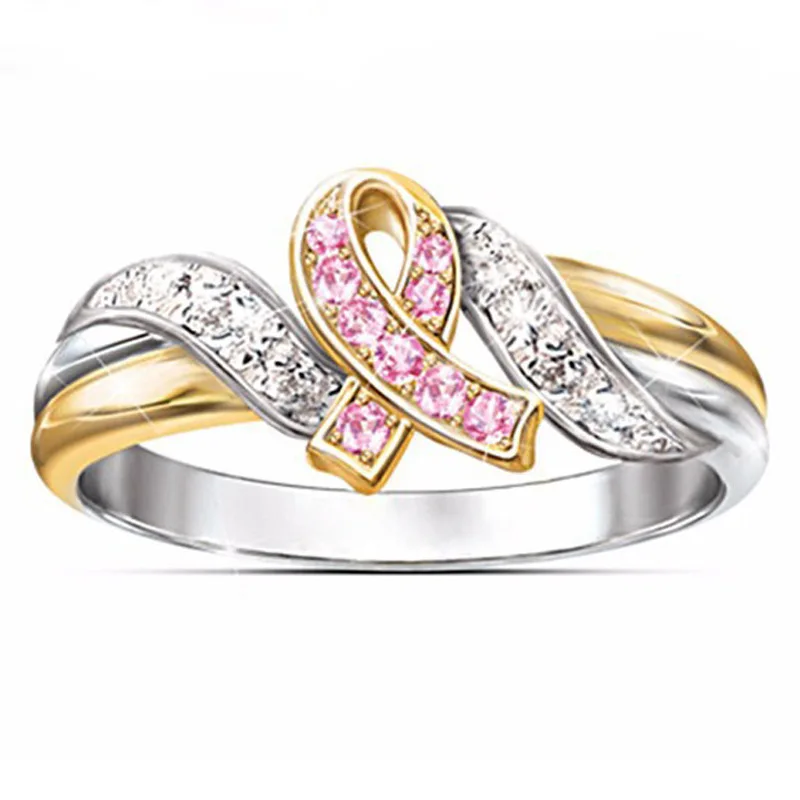
A ring to show your support for domestic abuse awareness, a unique option to the ribbon lapel pin. Purple ribbon women's ring, thank you for showing your support for child abuse prevention.
$19.99
DESCRIPTION DETAILS:
Metals Type: Stainless Steel
Material: Cubic Zirconia – various colors. Please email for color requested.
Mom gives toddler away to a stranger. Scranton Police Department: what the woman did does not constitute a crime.
This article gave me so many mixed emotions. First, I felt sad thinking of the child and how scared an alone he must feel; then I felt relieved that the mother didn’t hurt her child.
A distressed mother handed her baby boy to a stranger on the street and told the woman ‘he’d be better off with you.’
The mother passed her little boy – believed to be between 12 and 15 months old – to the stunned stranger outside a laundromat in Scranton, Pennsylvania, on Tuesday. She then walked away.
The stranger she gave the baby to immediately contacting police. Scranton Police Department said what the woman did does not constitute a crime. Continue reading…
Every nine minutes, government authorities respond to another report of child sexual abuse.
The possibility of children being harmed is always a tough subject for me to talk or write about, but we can never be too careful when it comes to our babies. Every nine minutes, government authorities respond to another report of child sexual abuse. Moms, we must keep the conversation going.
It’s not always easy to spot sexual abuse because perpetrators take extra precautions to hide their actions. Some signs of abuse are easier to spot than others; here’s a comprehensive list of the most common red-flags in toddlers.
1. Personality Changes
A toddler who is being sexually abused may suddenly display personality characteristics not previously seen. For example, your child may seem anxious, insecure or depressed, according to New York University’s Langone Medical Center. Confident children may also become clingy or withdrawn. Some sex abuse victims suffer from low self-esteem and may have trouble making friends their age.
2. Behavior Changes
A young child being sexually abused will often undergo behavior changes as a result of the abuse. Young children, in particular, are likely to begin acting in an age-inappropriate manner. For example, she may begin sucking her thumb or being wetting her pants or the bed even though she is already potty-trained, according to the American Academy of Pediatrics. Changes in sleep patterns are also possible, with toddlers having trouble falling asleep or having regular nightmares.
3. Sexual Behavior
A toddler being sexually abused may also begin to display some sexual behaviors. For example, he may act out sexual acts with stuffed animals or other toys or may draw pictures of sexual acts, according to the American Academy of Pediatrics. Young children may also masturbate frequently or try to initiate sexual behavior with their friends or siblings.
4. Fear
A young sexual abuse victim may suddenly seem fearful of certain people or situations, including avoiding situations in which she will encounter her abuser. They may be afraid or getting undressed even at appropriate times, such as for bathing, or seem fearful of visiting the doctor or being examined by a health professional, according to Langone Medical Center. Some children also become fearful or going to the bathroom despite earlier success.
5. Physical Signs
Physical signs rarely are noticed in cases of child sexual abuse, according to the Stop It Now! organization. Still, some possible indications of sexual abuse include vaginal or anal discharge; pain or itching in the genital region; frequent urinary tract infections or sore throats; pain while urinating or having a bowel movement; and redness, bleeding, or bruising in the genital or anal area. Some abuse victims also begin to complain of physical ailments such as headaches or stomachaches.
Remember, you are not alone.
If you suspect sexual abuse you can talk to someone who is trained to help. Call the National Sexual Assault Hotline at 800.656.HOPE (4673) or chat online at online.rainn.org.
The pedophile network has such technologically advanced, encrypted data bases that it took five years for police to crack.
Some of you may remember when the secret symbols of pedophiles were made public by the FBI in 2006 and 2007. This topic is well-worth revisiting, because pedophiles haven’t gone anywhere, they’re just more sophisticated at hiding.
Here’s the recap.
These are the symbols pedophiles use to signal their sordid sexual preferences. The seemingly innocuous pastel-colored scrawls feature butterflies, love hearts, and spirals. But to FBI agents they signify something much darker.
One of the symbols, a blue spiraling triangle framed by another triangle, is known as the BoyLover logo. It is used by pedophiles who prefer young boys.
Another is for pedophiles who prefer much younger boys. This symbol, known as the LittleBoyLover logo, is also a blue triangle spiral, but drawn in a child-like scrawl. The
The so-called GirlLover logo is a heart inside a heart, indicated that the male or female pedophile prefers young girls.
Good Humor Ice cream logo.
Pedophiles who do not have a preference of gender use the ChildLover logo, which is a butterfly made up of love hearts.
Finally, there is the Childlove Online Media Activism logo, which pedophiles use as a symbol to promote their ’cause’: that sexual relationships between adults and minors should be decriminalized.
The symbol – a triangle, a love heart and a circle merged into one – has been circulating social media, blogs and webcasts for years. It has even appeared on some children’s toys.
Investigators with the FBI’s Cyber Division Innocent Images National Initiative first discovered the code in 2007.
Identical or similar jewelry and symbols as described in this intelligence bulletin should raise suspicion of possible pedophilia activity when found during searches.’
Fast forward to 2019
June-2019, Norwegian police uncovered yet another network of pedophiles, this one operating with such advanced technology that they went undetected for the past 20 years.
Police have seized several million photos and videos of assaults on young boys from around the world.
Encrypted data The pedophile network has possessed such technological expertise that it built up advanced, encrypted computer data bases so large that police have only managed to get through around 20 percent of the material seized after five years of investigation.
Held positions of trust The NRK state broadcaster reported that several of the men have worked with children or volunteer in positions that give them extensive contact with young boys. The husband of the male entertainer worked as a football (soccer) referee, according to NRK.
Investigators have worked on the case since 2014, when an Oslo mother overheard her 12-year-old son talking with a friend. He complained of having been groped by a man, an entertainer in his 50s who was a sort of mentor to them both through a local club. He wondered if the other boy had been assaulted as well. He had, and the mother reported the incidents to police.
The attorney acknowledged that the police investigation has revealed how the network of pedophiles operated with secret symbols that could identify their pedophile tendencies. The network includes individuals with unusually high levels of computer expertise. Several of the male suspects work with data technology.
Norwegian police made arrests last year, four years after police finally managed to crack their encrypted files and gain access to the material.
One of the men reportedly had gained responsibility in an international group referred to as “BoyLove” that also allegedly seeks to normalize sexual assault on children.
Charlie said his motivation for building the app came from watching his sister spiral into depression.
What a great idea! This may be old news to some but I’m just hearing about it.
If one button could change everything, save a life or help a teen, wouldn’t you tell everyone about it?
When Hannah Lucas was diagnosed last year with a medical condition that caused frequent fainting, she felt scared and alone.
“I started passing out more and more often and I was terrified of going anywhere,” Hannah, 15, told ABC News. “Because what ifI passed out and no one was around or what if someone took advantage of me?”
Hannah, a high school sophomore from Georgia, became anxious and depressed and started to self-harm, she said.
From that dark point in her life, Hannah and her younger brother, Charlie Lucas, 13, created an app to help people in distress.
The idea for the notOK App came from Hannah, who told her mom she wished there was an app she could use to quickly alert her family and friends when she needed help either physically or emotionally.
Charlie heard his sister’s idea and used coding skills he learned in summer camp to design the app.
“I helped illustrate it out so he would know what to do,” Hannah said of her brother. “He looked at my drawings and he coded it to tell the coders exactly what I wanted and how I wanted it to look.”
Charlie said his motivation for building the app came from watching his sister spiral intodepression.
“I saw Hannah depressed, and she told me about her idea, and I started wire-framing it,” he said. “Making this app made her feel better and that made me feel better.”
Hannah pitched the app while taking a summer class on entrepreneurship at Georgia Tech. Professors there were so intrigued by the siblings’ creation that they connected the family with a development company in Savannah.
Over the course of five months, Hannah and Charlie worked side by side with the developers, often over Skype, to see their idea for the app turn into reality.
They also compiled research onmental healthstatistics to make the case that their app would find an audience.
Among adolescents, an estimated 49.5 percent between the ages 13 to 18 have a mental disorder, according to NIMH.
NotOK was launched in February 2018, both iOS and Android versions. The app, was originally came with a $2.99 monthly fee, but is now offered for Free. It allows users to press a button that sends a text message to up to five preselected contacts.
The text, along with a link to the user’s current GPS location, shows up on the contacts’ phones with the message, “Hey, I’m not OK. Please call me, text me, or come find me.”
“The reaction we’ve heard has been really positive, especially from parents and kids suffering withanxiety,” Hannah said. “Those kids don’t know the words to tell somebody.”
Hannah added of the app, “It definitely gave me a sense of comfort.”
Peer-on-peer abuse is often undetected by parents, who assumed their kids are safe around other kids.
New research has confirmed the alarming number of children sexually abusing other children.
The national survey commissioned by Act for Kids revealed a staggering 24% of child abuse cases involve another child.
It also showed peer-on-peer abuse was often undetected by parents, who assumed their kids are safe around other kids.
Act for Kids released the research ahead ofChild Protection Week (September 1-7) to urge parents to take the necessary steps to protect their children online and learn more about the warning signs of problematic sexual behaviors.
The survey of 2,000 people living in Australia revealed, while three quarters blame access to adult content for problematic behaviours, two-thirds of parents still fail to secure their devices and one in two allow their children unsupervised access online.
While there are a number of places children might learn problematic behaviors, easy access to age-inappropriate content is a major factor in influencing these young minds.
Act for Kids program manager Miranda Bainsaid the survey findings were both surprising and scary,
“There is a lack of knowledge amongst parents of what constitutes problematic sexual behaviours in children and how these behaviors have the potential to lead to more harmful peer-on-peer abuse,” Ms Bain said.
“While there are a number of places children might learn problematic behaviors, easy access to age-inappropriate content is a major factor in influencing these young minds.”
Act for Kids Executive Services Director and Psychologist, Dr. Katrina Lines said, it was vital parents take the necessary steps to protect their children online and learn more about the warning signs of problematic sexual behaviors.
Dr. Lines explains, “Some steps parents can take to protect their kids is making sure they understand normal child sexual development and curiosity and share accurate facts and information about sexuality with their children,”
“I think parents should ensure they spend quality time with their kids doing fun things without technology. Teaching children protective behaviors, especially about private and public body parts is also relevant.”
Preteens are known for their defiant attitudes and dramatic mood swings, but over the last decade a much more disturbing characteristic has been increasing: depression.
A new study finds that one culprit may be a high fast-food, low plant–based diet. When researchers at the University of Alabama, Birmingham analyzed urine from a group of middle schoolers, they found high levels of sodium and low levels of potassium.
“High sodium, you’ve got to think of highly processed food,” said lead author Sylvie Mrug, Chair of the psychology department at UAB. “This includes fast food, frozen meals and unhealthy snacks. Low potassium, is an indication of a diet that lacks healthy fruits and vegetables that are rich in potassium, such as beans, sweet potatoes, spinach, tomatoes, bananas, oranges, avocados, yogurt and even salmon.”
The study also found that higher urine levels of sodium, and potassium at baseline, predicted more signs of depression a year and a half later, even after adjusting for variables such as blood pressure, weight, age and sex.
“The study findings make sense, as potassium-rich foods are healthy foods,” said dietitian Lisa Drayer, a CNN health and nutrition contributor. “So, if adolescents include more potassium-rich foods in their diet, they will likely have more energy and feel better overall — which can lead to a better sense of well-being and improved mental health.”
Disturbing trend
Depression among middle schoolers is on the rise. An analysis of national data found the rate of major depressive episodes among kids 12 to 17 within the last year had increased by a whopping 52% between 2005 and 2017.
The rate of depression, psychological distress and suicidal thoughts over the last year among older teens and young adults was even higher: 63%. Many factors could be contributing to the deadly trend among teens, including a chronic lack of sleep, an overuse of social media, even a fear of climate change.
Prior studies have similarly found a link between fast food, processed baked goods and depression in adults. One study in Spain followed almost 9,000 people over six years and found a 48% higher risk of depression in those who ate more highly processed foods.
Small sample, more research needed
The new study was small — only 84 middle school girls and boys, 95% African-American from low-income homes. But the methods were solid: They captured overnight urine samples to objectively test for high sodium and low potassium at baseline and again a year and a half later. Symptoms of depression were gathered on both occasions during interviews with the children and their parents.
But the study could only find an association between sodium and depression, not a cause and effect, and much more research needs to be done, Mrug said.
“It might also be true that a poor diet could be linked to other risk factors for depression, such as social isolation, lack of support, lack of resources and access to healthcare and substance abuse,” Drayer said.
“It might be hard to tease out if diet is the factor or simply a marker for other risk factors for depression.”
Healthy foods for teens:
Hard Boiled Eggs, Apples, String-cheese, Soft pretzels, Almonds, Peanut butter, anything with calcium.
Girls need extra iron:
Beef
Poultry
Pork
Clams
Oysters
Eggs
Good non-meat sources of iron include:
Vegetables (including spinach, green peas, and asparagus)
Beans
Nuts
Iron-fortified breads, cereal, rice, and pasta.
A multivitamin with 100% or less of the Daily Value for iron, vitamin D and other nutrients fills in the gaps in less-than-stellar diets.