As Christians it is our obligation to properly discern the message communicated by various symbols. God would not have us ignorant to the enemy or his devices (II Cor 2:11).
Know the signs and teach your children!
God would not have us ignorant to the enemy or his devices (II Cor 2:11).
Symbols represent strong presence in and/or authority over the item/person to which they are attached. Just like churches affix crosses to their steeple as a demonstration of Jesus’ Lordship over them, Nazis fly a Nazi flag over their homes or sport the emblem as an accessory indicating an allegiance/submission to all things Nazi.
While the symbols listed do have ties to occult/satanic practices, it is also important to know that some have been hi-jacked. As Christians it is our obligation to properly discern the message communicated by various symbols.
Why do we keep teaching our children about “stranger danger” when 90% of sexually abused children are exploited by someone in the immediate or extended family, or by someone close to the family?
How do child molesters gain access to their victims?
While some sexual abuse is purely opportunistic, most children are groomed and lured into situations where they are vulnerable to abuse.
Contrary to common “Stranger Danger” warnings, child molesters are rarely strangers; at least 90% of sexually abused children are exploited by someone in the child’s immediate or extended family, or by someone close to the family.
Common grooming strategies include:
1. Befriending parents, particularly single parents, to gain access to their children.
Ninety percent (90%) of sexually abused children are victimized by a parent, close family member or family friend, so there’s no need to “befriend” the parent(s), they’re already in your inner-circle.
2. Offering babysitting services to busy parents or guardians.
3. Taking jobs and participating in community events that involve children.
4. Becoming a guardian or foster parent.
5. Attending sporting events for children.
6. Offering to coach children’s sports.
7. Volunteering in youth organizations.
8. Offering to chaperone overnight trips.
9. Loitering in places children frequent – playgrounds, parks, malls, game arcades, sports fields, etc.
10. Befriending youngsters on social media (Snapchat, Instagram, Facebook, etc.) and online gaming platforms.
When and where do most sexual assaults usually happen?
Most child sexual abuse occurs in the home of the victim, the home of the offender, or another residence.**
Eighty-one (81%) of all child sexual abuse occurs in one-on-one situations: one-offender/one-child.
Wherever youth are physically or virtually alone with someone is a potential place where they can be subjected to sexual misconduct or abuse.
With incidents involving juvenile offenders, 1 in 7 sexual assaults occurs on schooldays between 3pm-7pm, with a peak from 3-4pm, right after school. This speaks to the importance of safe after-school care and close supervision of multi-age groups of youngsters.
How do child molesters target their victims?
Early grooming efforts by sexual predators seek to determine if the child has a stable home life, or if the family is facing challenges like poverty, divorce, illness, drugs, homelessness, etc.
Children lacking stability at home are at higher risk for sexual abuse, as there is usually more access to the child and opportunities to abuse the child.
Child molesters will also target kids who are loners, or who look troubled or neglected. Youngsters who smoke, vape or use drugs and alcohol are seen as risk-seekers lacking adequate supervision, and therefore easy targets.
Single moms are often targeted, as they are more likely to be overwhelmed by parenting duties and vulnerable to offers to babysit and/or drive kids to school, practices, lessons and other activities.
Final Thoughts:
Child molesters are family members, relatives, neighbors, coaches, teachers, preachers, friends and our children’s peers. Knowing this – and knowing that adults cannot be with children every moment of every day – it is essential to talk openly with children about personal boundaries and personal safety.
Teach children, age-appropriately, how to recognize and evade the lures used for generations by sexual predators of every kind.
Thankfully, both children and adults are beginning to more readily report sexual abuse and harassment, saying boldly and loudly that these crimes are no longer acceptable.
Provides 24/7 assistance in 170 languages to adults, children and youth with information and questions regarding child abuse. All calls are anonymous and confidential.
The body remembers what the conscious mind chooses to forget.
This article isn’t meant to make anyone paranoid. But recognizing the signs of abuse may help you heal and/or provide support to someone close to you.
Wouldn’t I remember it if I was abused?
Child-victims of sexual abuse often do not remember the experience. In fact having no memory of certain parts of your childhood is often an indicator trauma of some form took place.
The National Society for the Prevention of Cruelty to Children (NSPCC) estimates that in the UK, almost one in four children (24.1%) experience sexual abuse. It’s a terrifying statistic, made more sobering considering that being sexually abused as a child can cause lifelong negative repercussions if victims do not find the support they need to heal.
What is sexual abuse?
It’s important to understand what qualifies as sexual abuse before dismissing an experience you might have had.
Sexual abuse does not have to be between a child and a ‘grownup’. It can, for example, be an older sibling who abuses you. Or it might have been a child of a similar age forcing you to do things against your will.
It is now recognized that sexual abuse does not even have to involve physicality to be extraordinarily damaging to a child and the future adult they will become.
Sexual abuse can can be any situation where a child is exploited for the sexual pleasure of another. Non-contact or ‘covert’ sexual abuse, can be things like an adult who constantly exposed their body to you, forced you to expose your body, showed you pornography, or an adult who constantly talked about sexual things to you.
Non-contact sexual abuse can be something like a child whose father always talks about her body being too sexual when she is going through puberty, or whose mother strips her and makes her stand naked in her room for hours as ‘punishment’ for ‘being bad’, can both result in the same symptoms of other forms of sexual abuse.
Psychoanalytical psychotherapy came up with the still popular idea that when things are too traumatic for the conscious brain they are delegated to the hidden ‘unconscious’ mind. Nowadays we understand the brain is not composed of clearly marked ‘closets’, and that trauma affects the brain in far more complicated ways.
Sexual abuse can cause many issues, not just in your behaviors, but in your relationships, your sex life, the way you treat yourself, personal identity, low self-esteem, stress management, it might be harder to reach goals or move forward in life. It can also cause long-term symptoms of trauma, similar to or including post-traumatic stress disorder (PTSD).
Have I been sexually abused? Knowing the signs.
Healthy relationships tend to be very challenging if you experienced sexual abuse as a child.
Do you experience some of the following?
Foggy thinking
Restlessness
Memory loss around trauma
More jumpy with noises and surprises than others
Emotional outbursts
Not liking certain places, situations, smells, sounds without knowing why
Deep feelings of shame and guilt
Trust issues
Fear of intimacy
Trouble setting boundaries and saying no
Fear of being alone
Easily stressed by relationships
Often overwhelmed by emotions
Resentment and anger issues
Sexual abuse as a child can also really affect the way you approach sex.
Do you recognize yourself in the following?
Promiscuity or, in some cases, fear or dislike sex
Saying yes to sex you don’t even want (being a ‘pleaser’)
Secretly not knowing what you really like sexually, confusion around your sexual identity
Dissociation during sex, feeling like you ‘leave your body’
Needing to escape into fantasy in order to enjoy sex
Having sexual fantasies where you are abused or raped
Constantly using sexual innuendo in conversations
You might also constantly attract relationships which ‘re-enact’ abuse. This can look like:
Co-dependency
Emotional abuse
Attracting those with traits of narcissism or narcissistic personality disorder (NPD)
Always playing the victim
Being sexually abused as a child or adolescent can lead to physical symptoms as well, or issues with your body. These can include:
Obesity
Constant low grade illnesses like cold or flue
Unexplained medical symptoms
Disconnected from your body, not knowing how you got bruises or high pain tolerance
Feeling dirty all the time, like you can never get clean enough
Feeling you can’t trust your body
The trauma of sexual abuse leads to many other psychological issues. Do you feel you might also suffer from some of the following?
Depression
Anxiety/ social anxiety
Sleep disorders
Eating disorders
Self-harm
Suicidal thinking
Low self-esteem
Identity crisis
Addictions
Sexual problems
Panic attacks
OCD around cleanliness or self-care
And finally, sexual abuse is linked to the manifestation of certain personality disorders, in particular borderline personality disorder and histrionic personality disorder.
Now I’m worried this might be me – what do I do?
The symptoms above are comprehensive, and many are also symptoms and signs of various other psychological issues. So the first thing to do is not to panic.
Unearthing previous trauma can lead to falling into a ‘vortex’ of research and worry. You can spend days or weeks in front of the computer or on forums and lose sight of the rest of your life. Try to stay balanced and practice good self-care until you can find support.
If you suspect you were sexually abused as a child, you might find yourself suddenly experiencing large waves of anger and fury. It is highly advised you don’t react by immediately contacting and accusing all the people who might have abused you.
You will be doing this from a vulnerable place, and can put yourself at risk of attack, psychological manipulation, and emotional abuse. You might even in the process alienate yourself from other family and friends whose support you count on.
Again, seek professional support first. A qualified mental health professional will help you process the experience and reach a more stable place. Then you will be better prepared to decide if, how, and when you will approach those involved.
“Sometimes I look at my kids and wonder if I’m f***ing them up”.
True story.
Last summer I was outside chatting with my neighbor, a very bubbly, high-energy nurse, happily married, with five kids. She and her husband were the ‘neighborhood socialites’. You know the house, the one where there’s a party 6 nights a week.
That particular night, as we all sat around talking and laughing about something I don’t remember, my neighbor paused, took a sip of wine and said; “… sometimes I look at my kids and wonder if I’m f***ing them up”.
That moment was so real. I could definitely relate because I’ve second-guessed my parenting skills numerous times over the years.
Remember when they were first born?
Every new parent experiences that first terrifying moment: your baby is screaming, not crying, screaming. You try to feed him. You check his diaper. You try to make him warmer, cooler, calmer, more comfortable, but to no avail. The complete mystery of this precious 8 pound, non-speaking creature rises to your consciousness, and, all at once, you’re struck by the realization that you have absolutely no idea what this tiny person wants or what to do to make him feel better.
It seems parenting would get easier as they get older. So not true. Different age means different needs. Sure, our children get older and become more self-sufficient. But there’s always an interesting, new challenge.
No parent is perfect. But how you react to your children’s emotions will always be important. Should you feel stressed or agitated, your child is likely to have trouble relaxing.
Should you feel calm and sure of yourself, your child is likely to feel secure and trusting. Our children depend on us for survival and, therefore, are highly attuned to our emotions.
So while we can’t expect to be perfectly in sync with our children at every moment, what we can do is recognize that no matter how oblivious we are to them, our children are almost always extremely attuned to us.
Every reaction we express (consciously and unconsciously) is absorbed by them, helping them shape their view of the world and of themselves.
The more calm and compassionate we are in reacting to our children, the moreresilient they become in handling their own emotions. Yet, as parents, we will always have moments when we fumble, tense up, say the wrong thing, and offer the wrong remedy.
Therefore, really improving our parenting means gaining a better understanding of ourselves. All parents both love and hate themselves, and they extend both of these reactions to their children. Because our kids come from us, we often confuse our own self-perceptions and experiences with theirs. The love we feel for ourselves is extended to our children as “Parental Nurturance.”
When parents feel good about themselves, they are much better able to extend this positive sense of self to their children. They can engage in activities, relate to, and offer their children support from a place of confidence and ease.
On the opposite side of the spectrum, when parents feel negatively toward themselves, it is equally easy for them to extend these feelings to their children. The negative thoughts parents harbor toward themselves can lead to parental rejection, neglect, or hostility.
Not only are parents more likely to be critical of their offspring in ways that are similar to the ways they are disapproving of themselves, but their negative self-esteem also serves as an example for their children. When we hear our kids comment on their weight or call themselves stupid, we may wonder where they got such ideas about themselves. We may never call our kids the things they call themselves, but we can certainly recall the many times we’ve criticized ourselves for being fat or stupid in front of them.
As kids grow up, they often take on their parents’ negative self-perceptions and the critical point of view directed toward them. For example, if a parent regards their child as a burden, that attitude will be woven into the child’s self-esteem. This negative programming, from parents and other influential persons in the child’s development, combined with other influences such as accidents, illness, and anxiety lead to the formation of the “Anti-Self System” and the “Critical Inner Voice” that accompanies it.
The Anti-Self System represents a variety of destructive and critical attitudes children adopt toward themselves and the world at large. The critical inner-voice operates as an internalized parent, reminding people of their flaws, warning them against certain actions, and instructing them about how to perceive the world.
Hurtful parental attitudes, projections, and unreasonable expectations expressed toward children are the basis of low self-esteem.
There are parents who offer false praise to their children in an effort to compensate for an absence of parental nurturance. This build up is actually harmful to a child’s sense of self, because it does not represent the truth and is not proportional to the child’s real actions or abilities. Verbally building up a child with statements like, “Look how big and strong you are. You are the smartest kid in the whole world,” may actually make a child feel insecure. It can lead to children having aggrandizing thoughts about themselves or to feeling pressure to live up to the build up; both of which hurt them in the future.
It is important to be aware of the example we set for our children. What we say to them, about them, and about ourselves will have a profound influence on how they view themselves.
The more attuned we are to ourselves, the better able we are to react sensitively to our children. The healthier we are emotionally, the less likely we are to project our own negative experiences and self-critical thoughts onto our kids.
We are also better able to recognize when we are on auto-pilot, automatically reacting to them as we were reacted to as children. Or when, without thought, we are criticizing them in ways that we criticize ourselves. We can also be alert to what makes us “lose it” with our child.
In all of these situations we can identify the attacks we are having on our children and ourselves, while simultaneously sourcing where these reactions are coming from. Do we get upset at similar qualities in our children that our own parents attacked in us? Are we compensating for a part of our past that we felt was mishandled by an influential figure in our early lives?
Perfection is impossible. But reflection helps us do better as parents.
When we do slip up, we can use our self-understanding to repair ruptures in our relationships with our children. We can apologize for our mistakes, empathize with their pain, and explain to them how we really feel. The more honest, open, and mindful we make the environment we share with our children, the more we enable our children to be resilient and to move confidently and independently into the world.
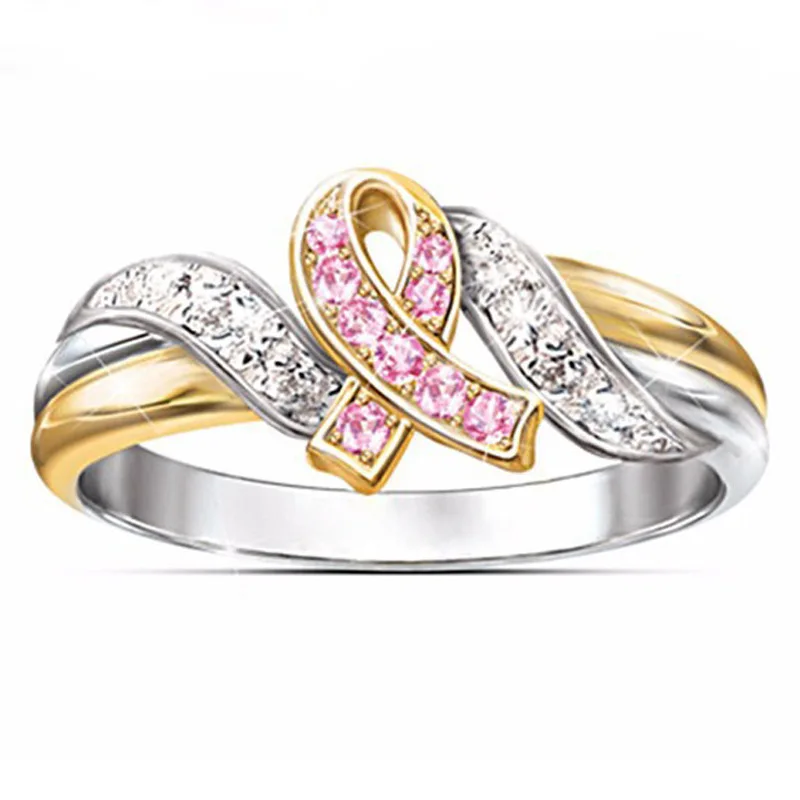
A ring to show your support for domestic abuse awareness, a unique option to the ribbon lapel pin. Purple ribbon women's ring, thank you for showing your support for child abuse prevention.
$19.99
DESCRIPTION DETAILS:
Metals Type: Stainless Steel
Material: Cubic Zirconia – various colors. Please email for color requested.
Mom gives toddler away to a stranger. Scranton Police Department: what the woman did does not constitute a crime.
This article gave me so many mixed emotions. First, I felt sad thinking of the child and how scared an alone he must feel; then I felt relieved that the mother didn’t hurt her child.
A distressed mother handed her baby boy to a stranger on the street and told the woman ‘he’d be better off with you.’
The mother passed her little boy – believed to be between 12 and 15 months old – to the stunned stranger outside a laundromat in Scranton, Pennsylvania, on Tuesday. She then walked away.
The stranger she gave the baby to immediately contacting police. Scranton Police Department said what the woman did does not constitute a crime. Continue reading…




 The Youth Advocate