Teen Siblings Create notOK App for Peers in Distress

Charlie said his motivation for building the app came from watching his sister spiral into depression.

What a great idea! This may be old news to some but I’m just hearing about it.

If one button could change everything, save a life or help a teen, wouldn’t you tell everyone about it?

When Hannah Lucas was diagnosed last year with a medical condition that caused frequent fainting, she felt scared and alone.

“I started passing out more and more often and I was terrified of going anywhere,” Hannah, 15, told ABC News. “Because what if I passed out and no one was around or what if someone took advantage of me?”

Hannah, a high school sophomore from Georgia, became anxious and depressed and started to self-harm, she said.

From that dark point in her life, Hannah and her younger brother, Charlie Lucas, 13, created an app to help people in distress.

The idea for the notOK App came from Hannah, who told her mom she wished there was an app she could use to quickly alert her family and friends when she needed help either physically or emotionally.

Charlie heard his sister’s idea and used coding skills he learned in summer camp to design the app.

“I helped illustrate it out so he would know what to do,” Hannah said of her brother. “He looked at my drawings and he coded it to tell the coders exactly what I wanted and how I wanted it to look.”

Charlie said his motivation for building the app came from watching his sister spiral into depression.

“I saw Hannah depressed, and she told me about her idea, and I started wire-framing it,” he said. “Making this app made her feel better and that made me feel better.”

Hannah pitched the app while taking a summer class on entrepreneurship at Georgia Tech. Professors there were so intrigued by the siblings’ creation that they connected the family with a development company in Savannah.

Over the course of five months, Hannah and Charlie worked side by side with the developers, often over Skype, to see their idea for the app turn into reality.

They also compiled research on mental health statistics to make the case that their app would find an audience.

Mental illness is defined by the National Institute of Mental Health (NIMH) as a mental, behavioral, or emotional disorder. One in six U.S. adults lives with a mental illness, the institute reports.

Among adolescents, an estimated 49.5 percent between the ages 13 to 18 have a mental disorder, according to NIMH.

NotOK was launched in February 2018, both iOS and Android versions. The app, was originally came with a $2.99 monthly fee, but is now offered for Free. It allows users to press a button that sends a text message to up to five preselected contacts.

The text, along with a link to the user’s current GPS location, shows up on the contacts’ phones with the message, “Hey, I’m not OK. Please call me, text me, or come find me.”

“The reaction we’ve heard has been really positive, especially from parents and kids suffering with anxiety,” Hannah said. “Those kids don’t know the words to tell somebody.”

Hannah added of the app, “It definitely gave me a sense of comfort.”

Original source: https://www.google.com/amp/s/www.goodmorningamerica.com/amp/wellness/story/teens-struggle-depression-led-brother-create-app-52791054. By KATIE KINDELAN. Accessed September 12,2019.

New Study: Linking Fast Food to Teen Depression

Preteens are known for their defiant attitudes and dramatic mood swings, but over the last decade a much more disturbing characteristic has been increasing: depression.

A new study finds that one culprit may be a high fast-food, low plantbased diet. When researchers at the University of Alabama, Birmingham analyzed urine from a group of middle schoolers, they found high levels of sodium and low levels of potassium.

“High sodium, you’ve got to think of highly processed food,” said lead author Sylvie Mrug, Chair of the psychology department at UAB. “This includes fast food, frozen meals and unhealthy snacks. Low potassium, is an indication of a diet that lacks healthy fruits and vegetables that are rich in potassium, such as beans, sweet potatoes, spinach, tomatoes, bananas, oranges, avocados, yogurt and even salmon.”

The study also found that higher urine levels of sodium, and potassium at baseline, predicted more signs of depression a year and a half later, even after adjusting for variables such as blood pressure, weight, age and sex.

“The study findings make sense, as potassium-rich foods are healthy foods,” said dietitian Lisa Drayer, a CNN health and nutrition contributor. “So, if adolescents include more potassium-rich foods in their diet, they will likely have more energy and feel better overall — which can lead to a better sense of well-being and improved mental health.”

Disturbing trend

Depression among middle schoolers is on the rise. An analysis of national data found the rate of major depressive episodes among kids 12 to 17 within the last year had increased by a whopping 52% between 2005 and 2017.

The rate of depression, psychological distress and suicidal thoughts over the last year among older teens and young adults was even higher: 63%. Many factors could be contributing to the deadly trend among teens, including a chronic lack of sleep, an overuse of social media, even a fear of climate change.

Prior studies have similarly found a link between fast food, processed baked goods and depression in adults. One study in Spain followed almost 9,000 people over six years and found a 48% higher risk of depression in those who ate more highly processed foods.

Small sample, more research needed

The new study was small — only 84 middle school girls and boys, 95% African-American from low-income homes. But the methods were solid: They captured overnight urine samples to objectively test for high sodium and low potassium at baseline and again a year and a half later. Symptoms of depression were gathered on both occasions during interviews with the children and their parents.

But the study could only find an association between sodium and depression, not a cause and effect, and much more research needs to be done, Mrug said.

“It might also be true that a poor diet could be linked to other risk factors for depression, such as social isolation, lack of support, lack of resources and access to healthcare and substance abuse,” Drayer said.

“It might be hard to tease out if diet is the factor or simply a marker for other risk factors for depression.”

Healthy foods for teens:

Hard Boiled Eggs, Apples, String-cheese, Soft pretzels, Almonds, Peanut butter, anything with calcium.

Girls need extra iron:

  • Beef
  • Poultry
  • Pork
  • Clams
  • Oysters
  • Eggs

Good non-meat sources of iron include:

  • Vegetables (including spinach, green peas, and asparagus)
  • Beans
  • Nuts
  • Iron-fortified breads, cereal, rice, and pasta.

A multivitamin with 100% or less of the Daily Value for iron, vitamin D and other nutrients fills in the gaps in less-than-stellar diets.

CNN Health. Fast food and Teen Depression. https://www.cnn.com/2019/08/29/health/fast-food-teen-depression-wellness. Accessed August 30, 2019.

Meet The Psychologists Helping Teens to Manage Mental Health and Reduce Self-harm

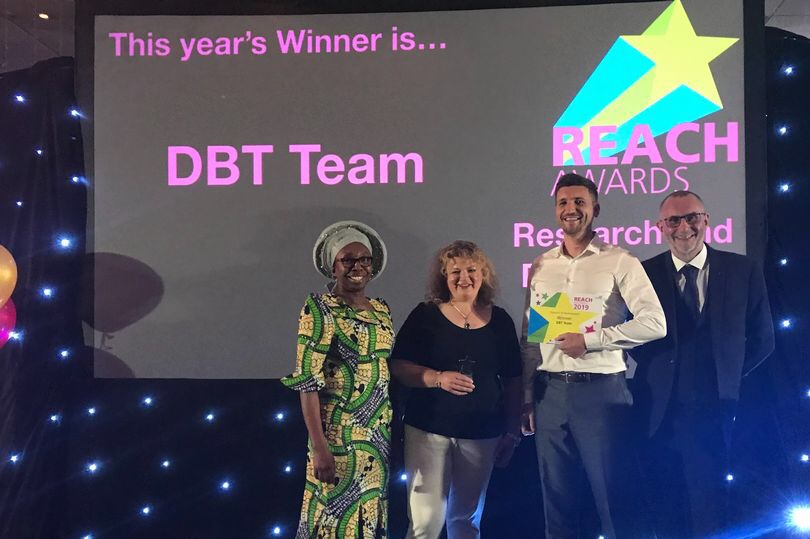
The DBT service aims to replace problematic behaviours with skillful ones, help teenagers navigate relationships and experience a range of emotions without necessarily acting on them.

By Bethan ShufflebothamCommunity Reporter

Five years ago there were no specific interventions for young people who were self-harming and feeling suicidal outside of cognitive behavior therapy (CBT) and family therapy.

In December 2014, the Trust’s Children and Adult Mental Health Service (CAMHS), was set up to meet the growing demand of young people with high levels of mental health needs in North Staffordshire.

Specifically, the team assisted teenagers aged 13 to 17 going through emotional difficulties which were causing them to self-harm or attempt to take their own lives.

The aim is to replace problematic behaviors with skillful ones, help teenagers navigate relationships and experience a range of emotions without necessarily acting on them.

Some states now allow students to take “mental health days.” This is an opportunity to start a conversation about how to address mental health in schools. Continue reading…

Here’s Why Your Teen Feels Constantly Criticized

Whether or not [parents] actually express more criticism than praise, teens and tweens are particularly susceptible to a distorted way of thinking referred to as mental filtering.

By Alisa Crossfield, Ph.D., Psychology Today

One of the most common complaints I hear from my tween, teen and young adult clients is that their parents harp on what they do wrong and never recognize all they do right.

At times, I have heard it from my own kids as well. Though there is the rare occasion when this is an accurate reflection of what parents think, more often one of two things are happening, and often both.

One of the culprits in maintaining kids’ beliefs that parents only see what they do wrong stems from our desire to help them. That desire translates into a never-ending flow of constructive criticism.

Whether or not [parents] actually express more criticism than praise, teens and tweens are particularly susceptible to a distorted way of thinking referred to as mental filtering. 

Continue reading: www.psychologytoday.com/us/blog/emotionally-healthy-teens/201906/feeling-constantly-criticized

Florida joins New York and Virginia in requiring yearly mental health courses to public middle and high school students

Florida public schools will be required to teach at least five hours of mental health instruction to all students in sixth through twelfth grades every year.
Read on abcnews.go.com/US/florida-require-mental-health-courses-public-schools-beginning/story

What Is Sextortion?

According to the FBI, sextortion cases are up 60 percent in the last five years.

It can happen in a matter of minutes, but the trauma can stay with victims forever.

Unlike cyberbullying, which most parents know about and discuss with their teens, sextortion isn’t on a lot of parents’ radars, leaving kids unguarded and vulnerable to attacks.

Read more…

The Bully at Home; When it’s More Than Just Sibling Rivalry

When people talk about toxic family members, they usually speak about a dad they don’t get along with, or a mom who is too controlling. But toxic family members can include siblings too.

Siblings should be friends to lean on, shoulders to cry on, and occasionally scapegoats to put the blame on. However, if you’re now an adult and your relationship growing up harbored more bad than good, such as constant arguments, emotional/verbal abuse, or never-ending competition; you may want to take a step back and ask if it’s worth it to repair the sibling relationship you’ve been dealing with since childhood.

The following six signs will help you determine if it was more than meaningless sibling fights.

  1. You were constantly the butt of all jokes.

Abuse comes in many forms — from name calling, endless insults, hitting, to sexual harassment and more. If you find that your sibling grew up constantly belittling you with harsh words, that’s verbal abuse.

When a married couple argue constantly and rarely have a calm, loving moment, it often ends in divorce. But when siblings fight on a regular basis, too many times it’s dismissed as innocent sibling rivalry.

2. Majority of arguments were over insignificant topics.

If you fought daily, even over something as little as the TV remote, that is a sign of an unhealthy relationship. Not every little thing should cause a fight.

For young girls, when one of the first male relationships in her life (with a father or brother) is toxic, it can be devastating. Name-calling and making negative comments about her physical appearance can cause her to have poor body image and low self-esteem.

This type of sibling rivalry can have long-term effects on your mental and physical health.

3. You constantly felt controlled or manipulated

It’s common for an older sibling to manipulate a younger one. It gives them a sense of power.

This control could have been used for the better, like encouraging the younger sibling to try the same sport as, but more often than not it’s used for sinister reasons.

4. Lack of Trust

Could you trust your sibling with your secrets? If not, the “sibling bond” was never there.

You may have wanted to confide in your sibling as opposed to a parent. But they waited for the perfect time to spill the beans to the rest of the family or embarrass you in front of friends.

If you couldn’t count on your sibling to keep it a secret, it wasn’t a trustworthy relationship.

5. You stressed about your toxic sibling even when they weren’t around

It’s common to think about a blowout fight the day after it happens; however, if you constantly carried negative thoughts when your sister or brother weren’t around, that’s a different story.

Our family and friends should bring out the “best” side of us. But if bad thoughts of your sibling outweigh the good and negatively affected your schoolwork or job performance, it’s likely you had a toxic sibling relationship.

6. Interactions are still forced

It’s not a good sign if you’re all grown-up and you still prefer to stay away during the holidays.

If you only run into them at family gatherings and have no desire to make plans with them any other time, it’s likely your relationship never outgrew a toxic stage.

Just because they are a family member doesn’t mean that it’s a relationship built on mutual love, respect and support for one another.

You are family by blood and that may be the only connection your relationship is thread together by.

It’s completely normal to want to know “why” the relationship was so toxic. But be empowered with the knowledge that you may never understand why.

“When you are living in constant anxiety never knowing or being able to predict how any engagement is going to turn out, it is time to love yourself enough to let go.”

~Genevieve Shaw Brown, ABCnews.Go.com

Teens Seeking Validation

 By Caroline Knorr

How Girls Are Seeking (and Subverting) Approval OnlineFrom selfies to shout-outs, girls are using social media both to build up and break down their self-image.  

It’s not a law that you have to post a selfie before, during, and after every activity. But for kids, it’s pretty much mandatory. The resulting likes, thumbs-ups, and other ratings all get tallied, both in the stark arithmetic of the Internet and in kids’ own minds.

For some — especially girls — what starts as a fun way to document and share experiences can turn into an obsession about approval that can wreak havoc on self-image.

That kids have been comparing themselves to popular images in traditional media — and coming up short — is a well-researched phenomenon. But new studies are just beginning to determine the effects of social media — which is arguably more immediate and intimate — on the way kids view themselves.

A Common Sense survey called Children, Teens, Media, and Body Image found that many teens who are active online fret about how they’re perceived, and that girls are particularly vulnerable:

– 35% are worried about people tagging them in unattractive photos.
– 27% feel stressed about how they look in posted photos.
– 22% felt bad about themselves if their photos were ignored.

How Kids Get Feedback
You probably know about popular apps such as Instagram and Snapchat. But the specific ways kids use these tools to get — and give — feedback can be troubling. Here are a few examples:

Instagram. The number of followers, likes, and emojis kids can collect gets competitive, with users often begging for them. Instagram “beauty pageants” and other photo-comparison activities crop up, with losers earning a big red X on their pics.

Snapchat. Numerical scores display the total number of sent and received chats. You can view your friends’ scores to keep tabs on who’s racking up the most views.

Lipsi. This anonymous question-and-answer app lets kids find out what others think of them.

“Am I pretty or ugly?” YouTube videos. Kids — mostly girls — post videos of themselves asking if other users think they’re pretty or ugly. These videos are typically public, allowing anyone — from kids at school to random strangers — to post a comment.

The Good News

Although approval-seeking and self-doubt continue to plague girls both privately and publicly, there are signs of fatigue. The “no-filter” trend is prompting girls to share their true selves and accept (and even challenge) whatever feedback they receive.

Under hashtags such as “uglyselfie,” and “nomakeup” girls post pics of their unadorned selves, funny faces, unretouched images, and “epic fails” (attempts at perfect selfies that went wrong).

Given that adolescents are naturally eager for peer validation — precisely when they begin to use social tools that provide it — it’s encouraging to see kids having fun with the notion of perfection.

As a matter of fact, one of the Common Sense study’s most welcome findings is that social media has the potential to combat unrealistic appearance ideals and stereotypes. And, after all, kids use social media to be, well, social, and constant rejection and pressure is no fun at all.

It makes you realize just how powerful social media tools can be. While they foster relationships and engagement — and can even bolster self-esteem — they can be both constructive and destructive. That’s why you can’t leave it all up to kids to find their way.

Whether your kids are just getting into social media or are seasoned posters, it’s critical to help guide them to use Snapchat, Instagram, and other networking apps for fun and connection and not as fuel for self-doubt.

What You Can Do

Talk about the pictures they post. Experimenting with identity is natural, and it’s very common for kids to adopt provocative stances in cell phone pictures, on their social network pages, and in YouTube videos. But are they doing it only because they think others expect it of them? What pose would they strike if they could do anything they wanted?

Ask how feedback makes them feel. Are they stressed out by others’ comments and feedback? Does it make them feel better to be “liked?” Why is external approval important? How do negative comments make them feel?

Help them develop a healthy self-image. Body image is developed early in childhood, and the family environment is very influential on how kids view themselves. Emphasize what the body can do instead of what it looks like. Also, be careful of criticizing your own looks and weight.

Rely on role models. Positive role models have an enormous effect on kids. Cultivate relationships with women your daughter can look up to. Also, point out celebrities and other famous folks who challenge stereotypes about size and beauty and seem comfortable in their own skins.

Help them stop the cycle. Urge them to post constructive comments that support their friends for who they are, not what they look like.

Help them view media critically. Talk about over-sexualized images or unrealistic body ideals of girls in the media.

Explore websites such as the Geena Davis Institute on Gender in the Media and the Representation Project that promote the importance of positive body image and valuing women for their contributions to society.

Original Source: https://www.commonsensemedia.org/blog/how-girls-are-seeking-and-subverting-approval-

Male Sex Abuse Survivors Delay Disclosure For Twenty Years On Average

At least 1 in 6 men and boys have been sexually abused or assaulted.

Talking about any type of abuse takes a lot of strength. Today, female victims of sexual assault and abuse may be more comfortable speaking publicly about their experiences and because of that, we’re having the conversation more often. But is it the same for male survivors?

Being a male survivor of child sex abuse is still very taboo and greatly under-reported.

According to 1in6.org and the Center for Disease Control, At least 1 in 6 men and boys have been sexually abused or assaulted.

I’m embarrassed to say that the assault of men and boys, honestly wasn’t on my radar as much as the abuse of girls. Now, I’m laser-focused on prevention so that parents (especially single-moms) aren’t blind-sided.

Four practical ways to help protect your child from pedophiles:

#1 – Have the conversation more than once

Sexual abuse may be an uncomfortable subject for many parents but its literally a matter of life or death. Just because you had ‘the talk’ with your son when he was eight, don’t assume he’d be completely comfortable telling you right away if something happened.

For males, the shame can be unbearable and not worth being judged or not believed.

Keep talking about it! Use various resources if you have to, educational videos and books are still a thing.

The purpose of having the conversation several times, is to make it a familiar, common subject in your household. If something ever happened, your son will know that it’s not his fault, which will help him get past the shame and disclose an incident sooner than later.

#2 – Beware of misconceptions

I was always concerned that while teaching my children to respect their elders, they might perceive that rule as; never question an authority figure or adults are always right. Which we all know is definitely not true!

Psychologists say, the abuser/predator is usually someone close to the family. Help your child understand that not all adults mean them well.

Male survivor.

#3 – Don’t ignore red-flags

It can be easy to miss typical warning signs because depressed individuals are great at hiding their feelings.

Parents, if you have a fleeting thought or inkling that something could be wrong… GO WITH THAT. Get nosey, don’t wait until something happens to comb through your child’s phone and tablet.

It may be helpful to teach your child (of any age), that whenever a person says, don’t tell anyone; they’re either about to do something wrong or have already done something wrong.

When it comes to our children, it’s better safe than sorry. No one gets an automatic “trust badge” just because they’re in a noble profession.

Male survivor.

Remember, no one is a pedophile until they’re caught and convicted.

#4 – Never judge a book by its cover

Don’t be caught off guard! Just because someone has a noble title such as; Bishop, Doctor or Police Officer doesn’t automatically make them trustworthy. We would like to think-so, but we don’t live in a perfect world.There are good and bad people in every city, country, religion, ethnicity, and so-on.

Let’s forget credentials, forget the squeaky clean background check, forget that he was once voted mentor-of-the-year, never mind that he’s a former NFL player and now coaches your son.

I’m not saying you should be paranoid, but realistically, things can happen when we least expect it.

Here’s a quick reminder of a few abuse cases that made headline news:

FACT: At least 1 in 6 men have experienced sexual abuse or assault, according to leading research. Read about the statistic, find helpful information, chat with a trained advocate through the 24/7 national helpline, join a weekly online support group, view male survivors’ stories, etc. You’re not alone. Visit: https://1in6.org/

Male survivor.

Council to offer millennials a course in ‘adulting’

Millennials are getting a hard time right now. Barely a day passes without some reference to young people having a sense of entitlement and lacking in life skills.

Cooking, managing your money, and being able to change a tyre are just some of the basic skills many young folk aren’t armed with when they enter adulthood. 

But one council is looking to change all that by offering millennials a crash course in adulting. Read more…