Meet The Psychologists Helping Teens to Manage Mental Health and Reduce Self-harm

The DBT service aims to replace problematic behaviours with skillful ones, help teenagers navigate relationships and experience a range of emotions without necessarily acting on them.

By Bethan ShufflebothamCommunity Reporter

Five years ago there were no specific interventions for young people who were self-harming and feeling suicidal outside of cognitive behavior therapy (CBT) and family therapy.

In December 2014, the Trust’s Children and Adult Mental Health Service (CAMHS), was set up to meet the growing demand of young people with high levels of mental health needs in North Staffordshire.

Specifically, the team assisted teenagers aged 13 to 17 going through emotional difficulties which were causing them to self-harm or attempt to take their own lives.

The aim is to replace problematic behaviors with skillful ones, help teenagers navigate relationships and experience a range of emotions without necessarily acting on them.

Some states now allow students to take “mental health days.” This is an opportunity to start a conversation about how to address mental health in schools. Continue reading…

Here’s Why Your Teen Feels Constantly Criticized

Whether or not [parents] actually express more criticism than praise, teens and tweens are particularly susceptible to a distorted way of thinking referred to as mental filtering.

By Alisa Crossfield, Ph.D., Psychology Today

One of the most common complaints I hear from my tween, teen and young adult clients is that their parents harp on what they do wrong and never recognize all they do right.

At times, I have heard it from my own kids as well. Though there is the rare occasion when this is an accurate reflection of what parents think, more often one of two things are happening, and often both.

One of the culprits in maintaining kids’ beliefs that parents only see what they do wrong stems from our desire to help them. That desire translates into a never-ending flow of constructive criticism.

Whether or not [parents] actually express more criticism than praise, teens and tweens are particularly susceptible to a distorted way of thinking referred to as mental filtering. 

Continue reading: www.psychologytoday.com/us/blog/emotionally-healthy-teens/201906/feeling-constantly-criticized

The Most Missed Signs That a Child Has Been Sexually Abused

In the United States, government authorities respond to a child sexual abuse report every 9 minutes. Recognizing the signs of abuse is the first step in protecting a child who’s in danger. Unfortunately, the signs aren’t always apparent.

Ninety-three percent (93%) of child sexual assault victims already know their abuser. Sexual predators are usually close to the family and in positions of trust, which means that parents and caregivers already have their guards down. It’s hard to fathom that someone in your inner-circle could be capable of violating a child.

Six child sex abuse signs that can be easily missed:

#1. The grooming stage.

One thing abusers have in common is their effort to gain trust.

Those efforts may include: gift giving without occasion or reason, allowing the child to witness them giving elaborate gifts to others (attempt to impress), taking the child out to eat, movies, being overly complimentary to the parent and/or child, extra time with one-on-one tutoring or coaching (alone time) trips out of town, and more.

Single moms beware! Initially you may be flattered that this person has taken a special interest in your child, but in reality the abuser sees you and your child as an easy target.

Keep your eye out for the grooming stage!

#2. Common misconceptions.

At least 1 in 6 men have experienced sexual abuse or assault, whether in childhood or as adults.  Don’t be blindsided!

Research on male childhood sexual abuse concluded that the problem is common, under-reported, under-recognized, and under-treated.

Parents, we must remain as diligent with protecting our sons as we are with protecting our daughters.

MYTH: Men who abuse boys are gay. FALSE.

Studies suggest that men who have sexually abused a boy most often identify as heterosexual and often are involved in adult heterosexual relationships at the time of abusive interaction. 

#3. Bedwetting or resuming behaviors they have grown out of.

Resuming behaviors of a younger child such as thumb sucking or wetting the bed are red-flags.

If you have a pre-teen or teenager, don’t dismiss bedwetting as just an isolated incidence. Pay attention!

#4. Unexplained bruising or spots on the sheets.

When children play outside and are involved in sports, a little blood here and there may not be cause for alarm. If you have boys, cuts and bruises are the norm and won’t even warrant a second look.

But, as we now know, any unexplained stains on the sheets or clothing is worth a mini-investigation.

#5. Sexual behavior that is inappropriate for the child’s age.

Other warning signs include; excessive talk about or knowledge of sexual topics, asking other children to behave sexually or play sexual games.

A toddler masturbating or mimicking adult-like sexual behaviors with stuffed animals, toys or other objects is a strong sign of sexual abuse.

#6. Typical pedophilia behavior: Tries to be a child’s friend rather than filling an adult role in the child’s life.

– Abusers are often in a positions which give them access to children (i.e. church, coaching, mentoring) either as a career or volunteer.

– The abuser may often talk with children about their personal problems and relationships.

– They may vocalize how much they “love kids” and have several relationships with children outside the scope of their professional realm.

Typical Signs in adolescents:

  • Self-injury (cutting, burning)
  • Inadequate personal hygiene
  • Drug and alcohol abuse
  • Sexual promiscuity
  • Running away from home
  • Depression, anxiety
  • Suicide attempts
  • Fear of intimacy or closeness
  • Compulsive eating or dieting

Violations of trust are betrayals that have lasting effects. Parents, this is a matter of life or death, you can’t be too cautious. Remember, you are not alone. If you suspect sexual abuse you can talk to someone who is trained to help.

National Sexual Assault Hotline at 800.656.HOPE (4673) or chat online at online.rainn.org.

Online Prevention Training- https://www.stopitnow.org/prevention-training-on-demand

References: Rainn.org, Stopitnow.org, 1in6- https://1in6.org/get-information/the-1-in-6-statistic/

Almost two-thirds of children worry ‘all the time’

Article by BBC News:  Research among 700 children aged 10 and 11 for the mental-health charity Place2Be suggests almost two-thirds worry “all the time”.  Here’s what 10 and 11 year olds worry about the most…

Read… www.bbc.co.uk/news/education-38861155

Florida joins New York and Virginia in requiring yearly mental health courses to public middle and high school students

Florida public schools will be required to teach at least five hours of mental health instruction to all students in sixth through twelfth grades every year.
Read on abcnews.go.com/US/florida-require-mental-health-courses-public-schools-beginning/story

What Is Sextortion?

According to the FBI, sextortion cases are up 60 percent in the last five years.

It can happen in a matter of minutes, but the trauma can stay with victims forever.

Unlike cyberbullying, which most parents know about and discuss with their teens, sextortion isn’t on a lot of parents’ radars, leaving kids unguarded and vulnerable to attacks.

Read more…

The Bully at Home; When it’s More Than Just Sibling Rivalry

When people talk about toxic family members, they usually speak about a dad they don’t get along with, or a mom who is too controlling. But toxic family members can include siblings too.

Siblings should be friends to lean on, shoulders to cry on, and occasionally scapegoats to put the blame on. However, if you’re now an adult and your relationship growing up harbored more bad than good, such as constant arguments, emotional/verbal abuse, or never-ending competition; you may want to take a step back and ask if it’s worth it to repair the sibling relationship you’ve been dealing with since childhood.

The following six signs will help you determine if it was more than meaningless sibling fights.

  1. You were constantly the butt of all jokes.

Abuse comes in many forms — from name calling, endless insults, hitting, to sexual harassment and more. If you find that your sibling grew up constantly belittling you with harsh words, that’s verbal abuse.

When a married couple argue constantly and rarely have a calm, loving moment, it often ends in divorce. But when siblings fight on a regular basis, too many times it’s dismissed as innocent sibling rivalry.

2. Majority of arguments were over insignificant topics.

If you fought daily, even over something as little as the TV remote, that is a sign of an unhealthy relationship. Not every little thing should cause a fight.

For young girls, when one of the first male relationships in her life (with a father or brother) is toxic, it can be devastating. Name-calling and making negative comments about her physical appearance can cause her to have poor body image and low self-esteem.

This type of sibling rivalry can have long-term effects on your mental and physical health.

3. You constantly felt controlled or manipulated

It’s common for an older sibling to manipulate a younger one. It gives them a sense of power.

This control could have been used for the better, like encouraging the younger sibling to try the same sport as, but more often than not it’s used for sinister reasons.

4. Lack of Trust

Could you trust your sibling with your secrets? If not, the “sibling bond” was never there.

You may have wanted to confide in your sibling as opposed to a parent. But they waited for the perfect time to spill the beans to the rest of the family or embarrass you in front of friends.

If you couldn’t count on your sibling to keep it a secret, it wasn’t a trustworthy relationship.

5. You stressed about your toxic sibling even when they weren’t around

It’s common to think about a blowout fight the day after it happens; however, if you constantly carried negative thoughts when your sister or brother weren’t around, that’s a different story.

Our family and friends should bring out the “best” side of us. But if bad thoughts of your sibling outweigh the good and negatively affected your schoolwork or job performance, it’s likely you had a toxic sibling relationship.

6. Interactions are still forced

It’s not a good sign if you’re all grown-up and you still prefer to stay away during the holidays.

If you only run into them at family gatherings and have no desire to make plans with them any other time, it’s likely your relationship never outgrew a toxic stage.

Just because they are a family member doesn’t mean that it’s a relationship built on mutual love, respect and support for one another.

You are family by blood and that may be the only connection your relationship is thread together by.

It’s completely normal to want to know “why” the relationship was so toxic. But be empowered with the knowledge that you may never understand why.

“When you are living in constant anxiety never knowing or being able to predict how any engagement is going to turn out, it is time to love yourself enough to let go.”

~Genevieve Shaw Brown, ABCnews.Go.com

The Silent Cry

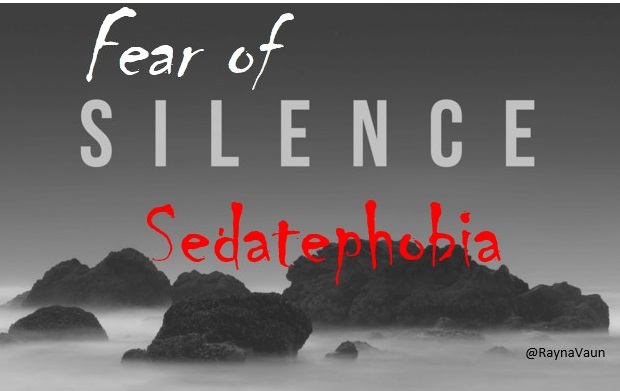
Does Your Child Have a Fear of Silence? It could be Sedatephobia!

“Silence”, it is said, ‘speaks a thousand words’. But to some people, silence can be downright scary. There is a term for this phobia: Sedatephobia. People suffering from Sedatephobia cannot withstand silence; they constantly need noise and human interaction.

The word originates from Greek ‘Sedate’ meaning ‘silent or sleeping or dead’ and Phobos meaning the Greek God of fear, or dread or aversion.

Sedatephobia was relatively unheard of 50 years ago. However, today, it is a fairly common phobia. Expert hypnotists and psychotherapists are seeing large numbers of Sedatephobic individuals in their offices and they believe that these numbers will continue to rise in the coming decades.

For Sedatephobic individuals, darkness might not be scary, but the silence and lack of noise can bring on a full blown panic attack. This constant neediness can be very harmful to the individual.

Symptoms of fear of silence

Excessive noise can be debilitating and can bring on headaches. However, it is silence that can cause various symptoms in a Sedatephobe. Power cuts can be especially trying to such people, since they are left without technology, noise, music or movies around to comfort them.

When left in silence, the phobic might have a full blown panic attack which may be characterized by following symptoms:

  • Shivering, shaking, trembling
  • Having dry mouth and sweaty palms
  • Inability to speak or express themselves: feeling detached from reality and having thoughts of death or dying
  • Feeling numb, feeling like crying or fleeing
  • Experiencing rapid heartbeat, nausea, gastrointestinal distress etc

Sometimes, a person with Sedatephobia can also feel afraid in a group when people stop talking or there is a lull in the conversation.

Exam times can be especially hard for these individuals. Spending time in a library or even trying to sleep alone can be a scary time for the sufferers of fear of silence phobia.

Causes of Sedatephobia

Like all other specific phobias, the fear of silence is usually caused by a traumatic or negative episode in the phobic’s life. Some phobics, for example might have been locked up or abused by an adult,(some having been kept in basements or closets for punishment where no outside sound reaches them).

The feelings the child has experienced then can get permanently etched on his/her mind. News of a loved one’s death or other traumatic/negative episode associated with silence can also bring on this phobia.

Many experts believe that technology has also given rise to the constant need for sounds around humans.

For some people, it is impossible to meditate or sit in a quiet room for even a few minutes as they always need their phone, music, TV, or the noise of traffic around them.

To be left in silence can mean being “hunted down by supernatural beings or things that go bump into the night”. It also brings the fear of the unknown.

Most sufferers of Sedatephobia also tend to have inherent anxieties. They may inherently have monophobia (the fear of being left alone). The fear of ghosts is also associated with this phobia.

Other causes of the fear of silence phobia include adrenal insufficiencies, depression, hormonal imbalances, and delusional paranoia.

Treating and overcoming the phobia

Family members can play an important role in helping an individual overcome his/her fear of silence.

Talking about the fear to a loved one (or in group therapy) can provide relief to some extent. Else it is best to seek professional help from a professional Therapist or Psychiatrist.

Today, many modern therapies like CBT (or cognitive behavior therapy), NLP or neurolinguistics programming and systematic desensitization therapies are known to help reduce anxiety experienced by Sedatephobia.

All these treatments can help one get to the root of the fear of silence phobia and help the sufferer overcome it once and for all.

Source and original article by: Jacob Olesen. https://www.fearof.net/fear-of-silence-phobia-sedatephobia/