You Don’t Have To Be a Veteran To Have PTSD

Depression is an illness, PTSD is a psychiatric anxiety disorder. It’s possible to have both at the same time.

Post Traumatic Stress Disorder (PTSD) is extremely different from typical anxiety and depression. Although, depression and PTSD share certain symptoms, many don’t realize that it is possible to experience both conditions at the same time.

You don’t have to be in the military to have PTSD.

According to David Yusko, Psy.D., Perelman School of Medicine,                  PTSD symptoms can develop from experiences involving natural disasters, serious accidents, life-threatening illnesses, physical abuse, and sexual assault during childhood or adulthood.

A traumatic event that precedes the onset of PTSD can be experienced either directly or indirectly by an individual.

Learning how a loved one died a violent death, or watching someone be assaulted, are examples of indirect trauma exposure.

The Difference Between PTSD and Depression

Depression doesn’t just go away overnight, it’s an illness that can be treated with therapy or medication.

Post Traumatic Stress Disorder is a psychiatric, anxiety disorder that happens after experiencing a horrible event.

Although military veterans constitute a great proportion of cases- PTSD can also be caused by various traumatizing events, for example:

  • Death of a loved one, family member or friend by suicide or homicide
  • Directly experiencing or witnessing traumatic events
  • Serious car accident
  • Physical assault
  • Sexual violation
  • Exposure to actual or threatened death
  • Abuse (physical, emotional, sexual)
  • Learning that a traumatic events occurred to a close family member or friend

Common Symptoms of PTSD:

  1. Persistent avoidance of distressing memories
  2. Detachment or estrangement from others
  3. Lack of motivation
  4. Thoughts, or feelings about or closely associated with the traumatic events or of external reminders (i.e., people, places, conversations, activities, objects, situations)
  5. Insomnia
  6. Inability to remember an important aspect of the traumatic events (not due to head injury, alcohol, or drugs)
  7. Jumpy/ easily startled
  8. Persistent irritability, anger, lashing out
  9. Nightmares
  10. Memory loss, difficulty recalling recent events unrelated to the trauma
  11. Distorted blame of self or others about the cause/consequences of traumatic events
  12. Persistent fear, horror, guilt, or shame
  13. Exaggerated negative beliefs (e.g., “I’m bad,” “No one can be trusted,” “The world is completely dangerous”)
  14. Diminished interest or participation in significant activities
  15. Persistent inability to experience positive emotions
  16. Numbing or self medicating, drugs and alcohol

Help & Referrals

HelpGuide.org – https://www.helpguide.org/articles/ptsd-trauma/ptsd-symptoms-self-help-treatment.htm

American Psychiatric Association – https://www.psychiatry.org/patients-families/ptsd

National Institute of Mental Healthhttps://www.nimh.nih.gov/health/topics/post-traumatic-stress-disorder-ptsd/index.shtml

Please visit the Department of Veterans Affairs (VA) website to learn more about other treatment options for PTSD. Additional resources include the Center for the Treatment and Study of Anxiety, the VA’s National Center for PTSD, the International Society for Traumatic Stress Studies, and any rape crisis center near you.

Source: https://www.anxiety.org/

How To Manage Anxiety When You Feel Like You’ve Tried Everything

If it feels like you’ve tried everything to manage your anxiety, but have yet to find what you’re looking for, keep in mind there are always more options out there.

By Carolyn Steber, Bustle

Constant anxiety can be debilitating, and feeling like you’ve tried everything to get rid of it can add another layer of anxiety in itself.

Sure, the go-to treatments, like medications and therapy, can be a huge help. But they don’t do the trick for everyone — at least not right away — and it’s important to keep that in mind so you don’t feel too frustrated.

Try the following seven holistic ideas:

Read more… www.bustle.com/p/how-to-manage-anxiety-when-you-feel-like-youve-tried-everything-according-to-experts-18138770

The Most Missed Signs That a Child Has Been Sexually Abused

In the United States, government authorities respond to a child sexual abuse report every 9 minutes. Recognizing the signs of abuse is the first step in protecting a child who’s in danger. Unfortunately, the signs aren’t always apparent.

Ninety-three percent (93%) of child sexual assault victims already know their abuser. Sexual predators are usually close to the family and in positions of trust, which means that parents and caregivers already have their guards down. It’s hard to fathom that someone in your inner-circle could be capable of violating a child.

Six child sex abuse signs that can be easily missed:

#1. The grooming stage.

One thing abusers have in common is their effort to gain trust.

Those efforts may include: gift giving without occasion or reason, allowing the child to witness them giving elaborate gifts to others (attempt to impress), taking the child out to eat, movies, being overly complimentary to the parent and/or child, extra time with one-on-one tutoring or coaching (alone time) trips out of town, and more.

Single moms beware! Initially you may be flattered that this person has taken a special interest in your child, but in reality the abuser sees you and your child as an easy target.

Keep your eye out for the grooming stage!

#2. Common misconceptions.

At least 1 in 6 men have experienced sexual abuse or assault, whether in childhood or as adults.  Don’t be blindsided!

Research on male childhood sexual abuse concluded that the problem is common, under-reported, under-recognized, and under-treated.

Parents, we must remain as diligent with protecting our sons as we are with protecting our daughters.

MYTH: Men who abuse boys are gay. FALSE.

Studies suggest that men who have sexually abused a boy most often identify as heterosexual and often are involved in adult heterosexual relationships at the time of abusive interaction. 

#3. Bedwetting or resuming behaviors they have grown out of.

Resuming behaviors of a younger child such as thumb sucking or wetting the bed are red-flags.

If you have a pre-teen or teenager, don’t dismiss bedwetting as just an isolated incidence. Pay attention!

#4. Unexplained bruising or spots on the sheets.

When children play outside and are involved in sports, a little blood here and there may not be cause for alarm. If you have boys, cuts and bruises are the norm and won’t even warrant a second look.

But, as we now know, any unexplained stains on the sheets or clothing is worth a mini-investigation.

#5. Sexual behavior that is inappropriate for the child’s age.

Other warning signs include; excessive talk about or knowledge of sexual topics, asking other children to behave sexually or play sexual games.

A toddler masturbating or mimicking adult-like sexual behaviors with stuffed animals, toys or other objects is a strong sign of sexual abuse.

#6. Typical pedophilia behavior: Tries to be a child’s friend rather than filling an adult role in the child’s life.

– Abusers are often in a positions which give them access to children (i.e. church, coaching, mentoring) either as a career or volunteer.

– The abuser may often talk with children about their personal problems and relationships.

– They may vocalize how much they “love kids” and have several relationships with children outside the scope of their professional realm.

Typical Signs in adolescents:

  • Self-injury (cutting, burning)
  • Inadequate personal hygiene
  • Drug and alcohol abuse
  • Sexual promiscuity
  • Running away from home
  • Depression, anxiety
  • Suicide attempts
  • Fear of intimacy or closeness
  • Compulsive eating or dieting

Violations of trust are betrayals that have lasting effects. Parents, this is a matter of life or death, you can’t be too cautious. Remember, you are not alone. If you suspect sexual abuse you can talk to someone who is trained to help.

National Sexual Assault Hotline at 800.656.HOPE (4673) or chat online at online.rainn.org.

Online Prevention Training- https://www.stopitnow.org/prevention-training-on-demand

References: Rainn.org, Stopitnow.org, 1in6- https://1in6.org/get-information/the-1-in-6-statistic/

The Best Thing You Can Do To Help a Depressed Friend

Whenever your friend explains what has happened or how they feel, you don’t need to always follow-up with a story of your own.

Knowing the right thing to say to a friend who’s in a dark place can be challenging. We want to help but may be afraid to say the wrong thing.

Whether your friend is suffering from depression, anxiety or abuse, the single most important thing you can do is, make yourself available.

Research confirms that just reaching out is critical.

Here are five ways to help, with no strings attached.

1. Keep checking in.

Reach out via text or phone call, and do it more than once. Make sure your words are nonjudgmental.

Choose what you say wisely especially when texting. Using a ton of smiley face emojis won’t help them feel better. It could actually do the opposite, making the person feel that you’re minimizing what they’re going through.

2. Meet them where they are.

Meet them where they are, as-in don’t pressure them to “get out”, or do anything else they’re not quite ready to do.

Allow them some space to direct the conversation and discover their own coping skills.

3. Remind them of things that make them happy.

Bringing up memories that you think are funny may not be a good idea; be certain that the memory is equally happy for them.

Be patient and kind, hopefully the conversation will help get them back to a somewhat positive head-space.

4. It’s not about you.

Whenever your friend explains what has happened or how they feel, you don’t need to always follow-up with a story of your own.

It may be tempting to share similar experiences in an effort to prove how much you can relate to their pain. But talking too much about yourself can be counter intuitive.

5. Don’t just say you’re available, prove it.

Continue to reach out even if they don’t respond at first.

Never just say, “Let me know if you need anythingorI’m here if you need me“. You don’t want to make your friend feel that they’re bothering you.

Individuals suffering from depression or having suicidal thoughts are great at hiding their feelings. It’s just easier for them to say, “I’m OK”.

You don’t always have to have an answer, just listening is the most important help you can give.

The Bully at Home; When it’s More Than Just Sibling Rivalry

When people talk about toxic family members, they usually speak about a dad they don’t get along with, or a mom who is too controlling. But toxic family members can include siblings too.

Siblings should be friends to lean on, shoulders to cry on, and occasionally scapegoats to put the blame on. However, if you’re now an adult and your relationship growing up harbored more bad than good, such as constant arguments, emotional/verbal abuse, or never-ending competition; you may want to take a step back and ask if it’s worth it to repair the sibling relationship you’ve been dealing with since childhood.

The following six signs will help you determine if it was more than meaningless sibling fights.

  1. You were constantly the butt of all jokes.

Abuse comes in many forms — from name calling, endless insults, hitting, to sexual harassment and more. If you find that your sibling grew up constantly belittling you with harsh words, that’s verbal abuse.

When a married couple argue constantly and rarely have a calm, loving moment, it often ends in divorce. But when siblings fight on a regular basis, too many times it’s dismissed as innocent sibling rivalry.

2. Majority of arguments were over insignificant topics.

If you fought daily, even over something as little as the TV remote, that is a sign of an unhealthy relationship. Not every little thing should cause a fight.

For young girls, when one of the first male relationships in her life (with a father or brother) is toxic, it can be devastating. Name-calling and making negative comments about her physical appearance can cause her to have poor body image and low self-esteem.

This type of sibling rivalry can have long-term effects on your mental and physical health.

3. You constantly felt controlled or manipulated

It’s common for an older sibling to manipulate a younger one. It gives them a sense of power.

This control could have been used for the better, like encouraging the younger sibling to try the same sport as, but more often than not it’s used for sinister reasons.

4. Lack of Trust

Could you trust your sibling with your secrets? If not, the “sibling bond” was never there.

You may have wanted to confide in your sibling as opposed to a parent. But they waited for the perfect time to spill the beans to the rest of the family or embarrass you in front of friends.

If you couldn’t count on your sibling to keep it a secret, it wasn’t a trustworthy relationship.

5. You stressed about your toxic sibling even when they weren’t around

It’s common to think about a blowout fight the day after it happens; however, if you constantly carried negative thoughts when your sister or brother weren’t around, that’s a different story.

Our family and friends should bring out the “best” side of us. But if bad thoughts of your sibling outweigh the good and negatively affected your schoolwork or job performance, it’s likely you had a toxic sibling relationship.

6. Interactions are still forced

It’s not a good sign if you’re all grown-up and you still prefer to stay away during the holidays.

If you only run into them at family gatherings and have no desire to make plans with them any other time, it’s likely your relationship never outgrew a toxic stage.

Just because they are a family member doesn’t mean that it’s a relationship built on mutual love, respect and support for one another.

You are family by blood and that may be the only connection your relationship is thread together by.

It’s completely normal to want to know “why” the relationship was so toxic. But be empowered with the knowledge that you may never understand why.

“When you are living in constant anxiety never knowing or being able to predict how any engagement is going to turn out, it is time to love yourself enough to let go.”

~Genevieve Shaw Brown, ABCnews.Go.com

The Silent Cry

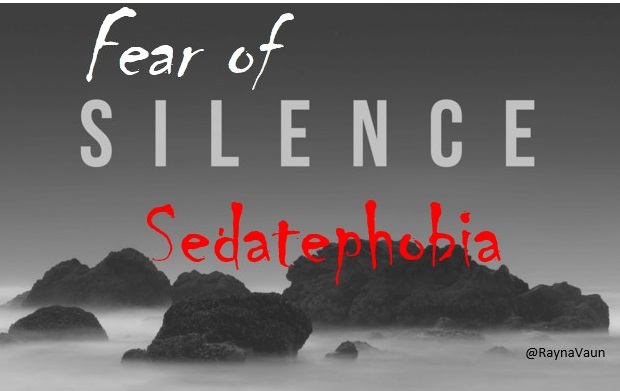
Does Your Child Have a Fear of Silence? It could be Sedatephobia!

“Silence”, it is said, ‘speaks a thousand words’. But to some people, silence can be downright scary. There is a term for this phobia: Sedatephobia. People suffering from Sedatephobia cannot withstand silence; they constantly need noise and human interaction.

The word originates from Greek ‘Sedate’ meaning ‘silent or sleeping or dead’ and Phobos meaning the Greek God of fear, or dread or aversion.

Sedatephobia was relatively unheard of 50 years ago. However, today, it is a fairly common phobia. Expert hypnotists and psychotherapists are seeing large numbers of Sedatephobic individuals in their offices and they believe that these numbers will continue to rise in the coming decades.

For Sedatephobic individuals, darkness might not be scary, but the silence and lack of noise can bring on a full blown panic attack. This constant neediness can be very harmful to the individual.

Symptoms of fear of silence

Excessive noise can be debilitating and can bring on headaches. However, it is silence that can cause various symptoms in a Sedatephobe. Power cuts can be especially trying to such people, since they are left without technology, noise, music or movies around to comfort them.

When left in silence, the phobic might have a full blown panic attack which may be characterized by following symptoms:

  • Shivering, shaking, trembling
  • Having dry mouth and sweaty palms
  • Inability to speak or express themselves: feeling detached from reality and having thoughts of death or dying
  • Feeling numb, feeling like crying or fleeing
  • Experiencing rapid heartbeat, nausea, gastrointestinal distress etc

Sometimes, a person with Sedatephobia can also feel afraid in a group when people stop talking or there is a lull in the conversation.

Exam times can be especially hard for these individuals. Spending time in a library or even trying to sleep alone can be a scary time for the sufferers of fear of silence phobia.

Causes of Sedatephobia

Like all other specific phobias, the fear of silence is usually caused by a traumatic or negative episode in the phobic’s life. Some phobics, for example might have been locked up or abused by an adult,(some having been kept in basements or closets for punishment where no outside sound reaches them).

The feelings the child has experienced then can get permanently etched on his/her mind. News of a loved one’s death or other traumatic/negative episode associated with silence can also bring on this phobia.

Many experts believe that technology has also given rise to the constant need for sounds around humans.

For some people, it is impossible to meditate or sit in a quiet room for even a few minutes as they always need their phone, music, TV, or the noise of traffic around them.

To be left in silence can mean being “hunted down by supernatural beings or things that go bump into the night”. It also brings the fear of the unknown.

Most sufferers of Sedatephobia also tend to have inherent anxieties. They may inherently have monophobia (the fear of being left alone). The fear of ghosts is also associated with this phobia.

Other causes of the fear of silence phobia include adrenal insufficiencies, depression, hormonal imbalances, and delusional paranoia.

Treating and overcoming the phobia

Family members can play an important role in helping an individual overcome his/her fear of silence.

Talking about the fear to a loved one (or in group therapy) can provide relief to some extent. Else it is best to seek professional help from a professional Therapist or Psychiatrist.

Today, many modern therapies like CBT (or cognitive behavior therapy), NLP or neurolinguistics programming and systematic desensitization therapies are known to help reduce anxiety experienced by Sedatephobia.

All these treatments can help one get to the root of the fear of silence phobia and help the sufferer overcome it once and for all.

Source and original article by: Jacob Olesen. https://www.fearof.net/fear-of-silence-phobia-sedatephobia/

Teens Seeking Validation

 By Caroline Knorr

How Girls Are Seeking (and Subverting) Approval OnlineFrom selfies to shout-outs, girls are using social media both to build up and break down their self-image.  

It’s not a law that you have to post a selfie before, during, and after every activity. But for kids, it’s pretty much mandatory. The resulting likes, thumbs-ups, and other ratings all get tallied, both in the stark arithmetic of the Internet and in kids’ own minds.

For some — especially girls — what starts as a fun way to document and share experiences can turn into an obsession about approval that can wreak havoc on self-image.

That kids have been comparing themselves to popular images in traditional media — and coming up short — is a well-researched phenomenon. But new studies are just beginning to determine the effects of social media — which is arguably more immediate and intimate — on the way kids view themselves.

A Common Sense survey called Children, Teens, Media, and Body Image found that many teens who are active online fret about how they’re perceived, and that girls are particularly vulnerable:

– 35% are worried about people tagging them in unattractive photos.
– 27% feel stressed about how they look in posted photos.
– 22% felt bad about themselves if their photos were ignored.

How Kids Get Feedback
You probably know about popular apps such as Instagram and Snapchat. But the specific ways kids use these tools to get — and give — feedback can be troubling. Here are a few examples:

Instagram. The number of followers, likes, and emojis kids can collect gets competitive, with users often begging for them. Instagram “beauty pageants” and other photo-comparison activities crop up, with losers earning a big red X on their pics.

Snapchat. Numerical scores display the total number of sent and received chats. You can view your friends’ scores to keep tabs on who’s racking up the most views.

Lipsi. This anonymous question-and-answer app lets kids find out what others think of them.

“Am I pretty or ugly?” YouTube videos. Kids — mostly girls — post videos of themselves asking if other users think they’re pretty or ugly. These videos are typically public, allowing anyone — from kids at school to random strangers — to post a comment.

The Good News

Although approval-seeking and self-doubt continue to plague girls both privately and publicly, there are signs of fatigue. The “no-filter” trend is prompting girls to share their true selves and accept (and even challenge) whatever feedback they receive.

Under hashtags such as “uglyselfie,” and “nomakeup” girls post pics of their unadorned selves, funny faces, unretouched images, and “epic fails” (attempts at perfect selfies that went wrong).

Given that adolescents are naturally eager for peer validation — precisely when they begin to use social tools that provide it — it’s encouraging to see kids having fun with the notion of perfection.

As a matter of fact, one of the Common Sense study’s most welcome findings is that social media has the potential to combat unrealistic appearance ideals and stereotypes. And, after all, kids use social media to be, well, social, and constant rejection and pressure is no fun at all.

It makes you realize just how powerful social media tools can be. While they foster relationships and engagement — and can even bolster self-esteem — they can be both constructive and destructive. That’s why you can’t leave it all up to kids to find their way.

Whether your kids are just getting into social media or are seasoned posters, it’s critical to help guide them to use Snapchat, Instagram, and other networking apps for fun and connection and not as fuel for self-doubt.

What You Can Do

Talk about the pictures they post. Experimenting with identity is natural, and it’s very common for kids to adopt provocative stances in cell phone pictures, on their social network pages, and in YouTube videos. But are they doing it only because they think others expect it of them? What pose would they strike if they could do anything they wanted?

Ask how feedback makes them feel. Are they stressed out by others’ comments and feedback? Does it make them feel better to be “liked?” Why is external approval important? How do negative comments make them feel?

Help them develop a healthy self-image. Body image is developed early in childhood, and the family environment is very influential on how kids view themselves. Emphasize what the body can do instead of what it looks like. Also, be careful of criticizing your own looks and weight.

Rely on role models. Positive role models have an enormous effect on kids. Cultivate relationships with women your daughter can look up to. Also, point out celebrities and other famous folks who challenge stereotypes about size and beauty and seem comfortable in their own skins.

Help them stop the cycle. Urge them to post constructive comments that support their friends for who they are, not what they look like.

Help them view media critically. Talk about over-sexualized images or unrealistic body ideals of girls in the media.

Explore websites such as the Geena Davis Institute on Gender in the Media and the Representation Project that promote the importance of positive body image and valuing women for their contributions to society.

Original Source: https://www.commonsensemedia.org/blog/how-girls-are-seeking-and-subverting-approval-

A Second Thought About Slumber Parties

As parents we want to keep our children safe but it’s impossible to watch over them 24/7. Where do we draw the line between good-parenting and outright paranoia?

Let’s chat about the innocent slumber party… the one night parents finally get a break!

When my daughter hit the 3rd grade she had a new-found interest in sleepovers.  She was more than ready to take a break from her older brother and spread her social-butterfly wings.  I had my apprehensions but didn’t want to rain on her little parade.

It can be a delicate task explaining to a 3rd grader why they can’t participate in something everyone else seems to be doing. It felt like saying “no” would make her an outcast amongst the school’s “inner circle”.

Despite my reservations, I allowed her to participate in two sleepovers that year. After the second one (which included 13 girls), she and I both knew accepting the invite wasn’t a good decision.

Let’s just say, there was a lot of turmoil, gossip, mini-arguments and boys, yes BOYS (the birthday girl’s older brother plus his friends)!

Five reasons why I banned sleepovers:

1. Vulnerability. A sleeping child is in their most vulnerable state. Some children are naturally hard sleepers and if anyone wanted to harm them, they’d be an easy target.

2. Sedatives. We’ve all heard of parents giving a child cough syrup or other sedatives for them to fall asleep faster and/or stay asleep longer. It happens.

Same thing with adults. If it makes sense for grown-ups to be cautious of someone slipping something into their drink, wouldn’t it makes more sense to prepare children for the same possibility.

It’s unfortunate to have to prepare a child for something so sinister, but children are naturally unsuspecting. We may as well add this to the life-skill training right along with active-shooter preparedness.

3. Just how well do you know the family? We get the sleepover invite and initially have no reservations. But take a pause to think about how well you really know everyone who lives in the home.

We know the mom, but how familiar are we with dad, siblings and anyone else living in the home. Hi and bye at school functions doesn’t count.

When it comes to abuse, the adult-male in the home shouldn’t automatically be the prime suspect. Is sibling sexual abuse on your radar?

Social Work Today sites sibling abuse as the least recognized form of abuse, while sexual abuse by related adults in a family receives the most attention.

Also consider… Is it a single-parent home? Who visits at night? Is there drug or alcohol use? Will the kids have access to it? What about weapons?

4. Can’t judge a book by its cover. Don’t be naïve.

A pedophile can be very kind and have a conservative, clean-cut appearance.  Draw a mental picture of a Catholic Priest, Coach, Scout Leader, Sunday School Teacher or friendly neighbor, they rarely look creepy.  

We’ve always put so much focus on protecting our daughters from pedophiles, but all along, our sons have been in an equal amount of danger.

Without completely “sheltering” our children and painting the world as all rainbows and roses, serious discussions regarding abuse require more than just one conversation.

5. Finding a way to make it real. Young children need to understand that sexual assault isn’t just something that happened “in the old days” or something that happens to “other people”.

The Truth…

Healing from gossip and petty girl-fights is much easier to deal with than the life-long psychological damage of sexual assault.

Source, modified: ** https://www.socialworktoday.com/archive/111312p18.shtml